The Middle East is experiencing rapid growth in hotel and mall construction. Developers in countries such as the UAE, Saudi Arabia, Qatar, and Kuwait are investing in high-end materials that offer both a luxury appearance and long-term performance.
Among these materials, decorative stainless steel has become one of the most popular choices. It is used widely in lobbies, façades, elevators, column cladding, and interior feature walls. Its strong durability and modern look make it suitable for large commercial spaces.
Heat and humidity resistance:Stainless steel maintains its finish even under extreme temperatures and high humidity.
Corrosion resistance:It performs well in coastal environments with salty air, common in Gulf countries.
Luxury appearance:Finishes such as mirror, brushed, gold PVD, rose gold, and bronze match the premium style of hotels and malls.
Low maintenance:It is easy to clean and lasts for many years, which helps reduce long-term costs.
High design flexibility:It can be customized with patterns, colors, textures, and different fabrication methods.
As the region continues to expand its hospitality and retail sectors, the demand for premium stainless steel designs is expected to keep rising. This blog will explore market trends, application areas, and examples of how stainless steel enhances luxury spaces in the Middle East.
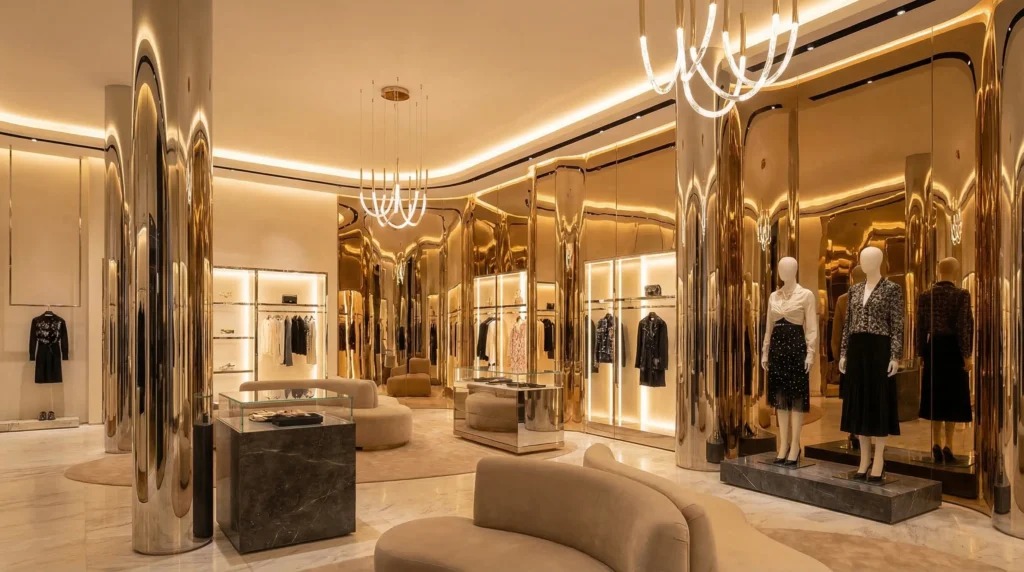
The Middle East continues to invest heavily in large commercial and hospitality projects. Countries like the UAE, Saudi Arabia, Qatar, and Kuwait are leading this development, supported by strong government spending and tourism growth. This creates a high demand for premium, durable, and visually impressive materials such as decorative stainless steel.
The region has many new luxury hotels, resorts, and mixed-use developments under construction.
Large shopping malls remain a key feature of Gulf countries, and many older malls are undergoing renovation to stay competitive.
Developers prefer materials that create a modern and upscale atmosphere, especially in public areas where foot traffic is high.
Stainless steel is widely used because it provides a clean, polished, and high-status appearance.
Gold, rose gold, bronze, and champagne PVD colored stainless steel match the design style commonly seen in Middle Eastern luxury interiors.
Architects also favor materials that allow custom patterns, such as laser-cut screens and decorative wall panels.
The Middle East’s climate includes high temperatures, humidity, and frequent exposure to dust or salty air in coastal cities. This creates a clear preference for materials that can last long without fading or corroding.
Stainless steel offers excellent corrosion resistance and does not warp or crack.
It requires minimal maintenance, which helps reduce operational costs for hotels and malls.
Its durability makes it a reliable choice for high-traffic areas such as entrances, corridors, and elevator halls.
More projects in the region now follow green building standards. Stainless steel is a recyclable material and fits well with sustainability requirements, making it a preferred option for modern developments.
Luxury hotels and malls in the Middle East are known for their bold, modern, and visually impressive designs. Decorative stainless steel plays an important role in achieving these looks. Below are the key design trends shaping current and upcoming projects in the region.
Gold-tone stainless steel is one of the most popular choices in Middle Eastern interior design.
PVD Gold, Rose Gold, Bronze, and Champagne finishes are widely used.
These colors match the region’s preference for luxury, warmth, and a premium atmosphere.
They are often applied in lobbies, reception areas, retail façades, and high-end restaurants.
Modern projects use mirror stainless steel to create a sense of space and brightness.
Mirror surfaces reflect light and make interior spaces look larger and more elegant.
They are commonly used in ceiling panels, decorative columns, elevators, and feature walls.
The clean and modern look fits perfectly with the architectural style in Dubai, Doha, and Riyadh.
Custom stainless steel patterns are in high demand.
Designers often use laser-cut screens, water ripple sheets, embossed patterns, and custom geometric designs.
These patterns combine modern aesthetics with traditional Middle Eastern cultural elements, creating a unique visual identity.
Such designs are widely used in mall entrances, partition screens, and luxury lounges.
Backlit metal panels create a strong visual effect and are often used in high-end retail stores and hotel lobbies.
LED-backlit stainless steel adds depth, contrast, and a premium ambiance.
It is commonly installed on feature walls, signage, reception desks, and bar counters.
This trend is growing rapidly due to the region’s focus on impressive nighttime lighting.
Many hotels and malls use stainless steel to highlight ceilings and columns.
Stainless steel helps create bold architectural statements.
Popular options include brushed, mirror, water ripple, and PVD-colored ceiling panels.
Column cladding in gold or bronze stainless steel gives public spaces a high-end, cohesive look.
Decorative stainless steel is widely used in Middle Eastern hotels and malls because it combines beauty, strength, and long-term value. Below are the most common application areas where stainless steel plays an important role.
The lobby is where guests form their first impression.
Stainless steel is used for feature walls, reception counters, ceiling panels, and decorative columns.
Gold and bronze PVD finishes help create a warm and luxurious atmosphere.
Mirror or brushed surfaces add a clean and modern look, suitable for 5-star hotels and premium malls.
Elevator areas experience heavy daily usage.
Stainless steel is ideal for elevator doors, cabin interiors, control panels, and lift lobby walls.
It provides high durability, resists fingerprints, and is easy to maintain.
Common choices include hairline, mirror, vibration, and etched finishes.
To attract customers, retail brands need strong visual appeal.
Stainless steel is used for shopfront frames, signage backdrops, decorative panels, and entrance structures.
Colored PVD finishes help luxury brands create a premium identity.
Laser-cut patterns or backlit designs improve visual impact, especially in shopping malls.
Modern Middle Eastern interiors often incorporate open layouts with decorative screens.
Stainless steel is used for laser-cut screens, room dividers, and geometric pattern panels.
These designs offer privacy while maintaining openness and airflow.
They combine both functional and decorative purposes, fitting perfectly with regional design styles.
Ceilings are a major visual element in many luxury hotels and malls.
Stainless steel ceiling panels add depth, reflection, and elegance.
Common options include water ripple sheets, mirror panels, and brushed panels.
When combined with LED lighting, the effect becomes more striking.
Large public spaces often feature tall, sculptural columns.
Stainless steel cladding protects columns from wear and adds a premium visual effect.
Gold, bronze, and champagne PVD colors are frequently used to match interior themes.
Custom curved and welded panels provide a seamless and high-end finish.
High-end hospitality spaces use stainless steel for:
Bar counters
Decorative shelving
Lighting covers
Wall panels and partitions
These applications help create a luxury, modern, and comfortable environment that aligns with the Middle Eastern hospitality experience.
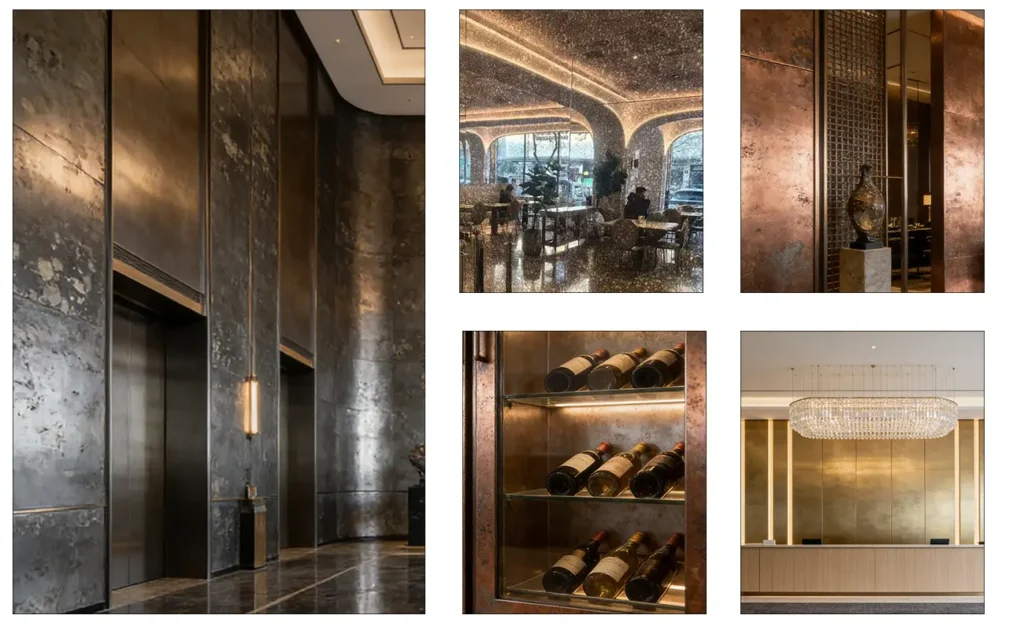
The Middle East has a unique environment characterized by extreme heat, high humidity, strong sunlight, dust storms, and coastal salt exposure. These conditions require building materials that can withstand long-term stress without losing their appearance or structural integrity. Decorative stainless steel performs exceptionally well in this environment.
Many Middle Eastern cities—such as Dubai, Abu Dhabi, Doha, and Kuwait City—are located near the sea, where the air contains high levels of salt.
Stainless steel, especially grades 304 and 316, provides strong resistance to corrosion.
PVD coatings further improve protection, preventing color fading and surface damage.
This makes stainless steel a safer and more durable choice than ordinary steel, aluminum, or painted surfaces.
Summer temperatures in the region can reach 45–50°C.
Stainless steel maintains its shape and finish under high temperatures.
It does not warp, crack, or peel when exposed to harsh sunlight.
This stability makes it reliable for façades, outdoor signage, and outdoor decorative elements.
Dust and sand are common in desert climates.
Stainless steel surfaces—especially brushed, vibration, and mirror finishes—are easy to clean.
Dirt does not accumulate easily, reducing maintenance costs for hotels and malls.
The material maintains its clean and modern look even in high-dust areas.
Hotels and shopping malls require materials that can stay beautiful for many years.
Stainless steel does not fade, rust, or degrade quickly.
Only simple cleaning is needed to maintain its appearance.
The long lifespan helps reduce replacement and remodeling costs.
Stainless steel is not only decorative—it also provides strong physical performance.
It resists impact and deformation, making it suitable for high-traffic public areas.
It offers fire resistance and maintains stability during temperature changes.
This combination of beauty and strength is ideal for premium commercial projects.
The demand for decorative stainless steel in Middle Eastern hotels and malls is expected to grow steadily. Designers and developers are seeking innovative solutions that combine aesthetics, functionality, and sustainability.
Brands increasingly want signature designs to stand out in competitive markets.
Stainless steel can be custom-colored, laser-cut, embossed, or 3D-patterned, allowing designers to create one-of-a-kind spaces.
This trend is particularly strong in luxury retail stores, hotel lobbies, and VIP lounges.
Green building standards such as LEED, Estidama, and GSAS are becoming more important.
Stainless steel is 100% recyclable, long-lasting, and requires minimal maintenance, making it ideal for sustainable architecture.
Developers can use stainless steel to meet sustainability goals without compromising luxury design.
Modern designs demand larger stainless steel panels to reduce seams and create clean, continuous surfaces.
Large panels are ideal for feature walls, façades, and columns, enhancing both visual impact and durability.
New techniques include gradient colors, backlit panels, water ripple textures, and laser-etched patterns.
These innovations allow stainless steel to combine traditional luxury with contemporary aesthetics.
Designers can integrate lighting, textures, and colors to create dynamic visual experiences in hotels and malls.
Advanced CNC, laser cutting, and digital fabrication technologies make complex patterns and bespoke designs possible.
This trend enables designers to create intricate Islamic geometric patterns, brand logos, and decorative motifs with high precision.
Customization: Unique, brand-specific designs are in demand.
Sustainability: Recyclable, durable materials are preferred.
Large, seamless panels: Create cleaner, modern spaces.
Innovative finishes: Combine aesthetics and functionality.
Digital fabrication: High precision for complex patterns and textures.
By following these trends, designers and developers in the Middle East can create luxurious, sustainable, and visually impressive spaces using decorative stainless steel.
Inquiry Now