PVD stainless steel is widely used in decorative and architectural projects because of its modern appearance and durable surface. However, many people still ask an important question: does PVD stainless steel rust?
The answer is that PVD coating can improve the surface durability and corrosion resistance of stainless steel, but it does not make the material completely rust proof. The actual performance depends on several factors, including the stainless steel grade, the environment, fabrication quality, and maintenance conditions.
High-quality PVD coated stainless steel sheets can maintain their appearance for many years in indoor commercial applications such as elevators, hotels, retail stores, and wall panels.
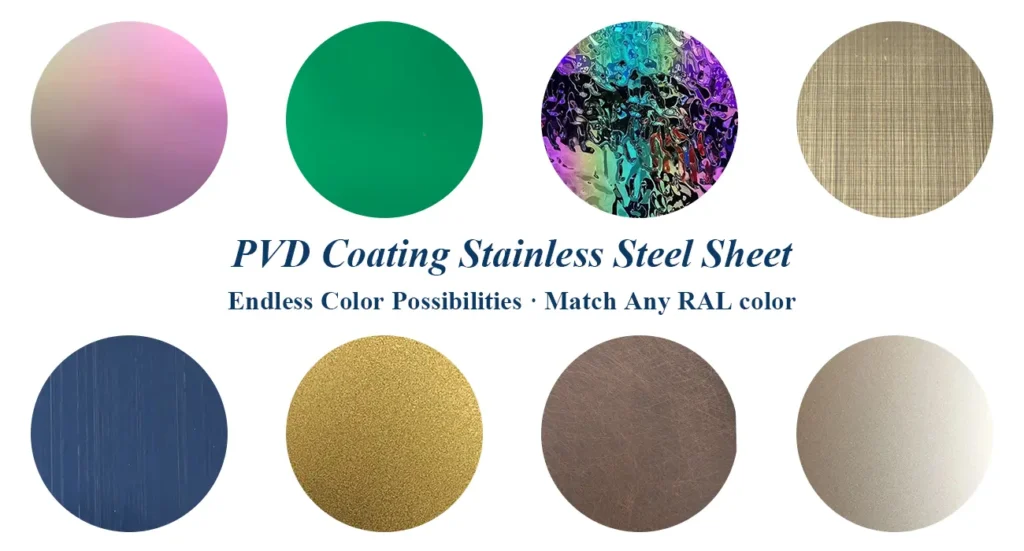
Stainless steel is known for its corrosion resistance, but this does not mean it can never rust.
Stainless steel contains chromium, which helps form a thin protective oxide layer on the surface. This layer helps protect the metal from corrosion in normal environments.
However, under certain conditions, stainless steel may still develop rust or surface staining. Common causes include:
For decorative stainless steel projects, choosing the correct stainless steel grade is very important for long-term performance.
PVD coating can help improve the surface performance of stainless steel, but it should not be considered a guarantee against rust.
The PVD coating process creates a thin and durable surface layer through Physical Vapor Deposition technology. This coating can improve:
In many indoor decorative applications, PVD coated stainless steel performs very well and maintains its appearance for a long time.
However, corrosion resistance still mainly depends on the stainless steel base material underneath the coating. If low-quality stainless steel is used, rust problems may still occur, especially in humid or coastal environments.
For this reason, many commercial projects choose high-quality 304 stainless steel or 316 stainless steel for decorative PVD applications.
The stainless steel grade plays an important role in corrosion resistance. For decorative PVD stainless steel sheets, the two most common materials are 304 stainless steel and 316 stainless steel.
304 stainless steel is widely used for indoor decorative applications because it offers good corrosion resistance and cost efficiency.
Common applications include:
For most indoor commercial projects, 304 PVD stainless steel provides stable performance and a long service life.
When choosing decorative finishes for indoor projects, many designers prefer hairline stainless steel or mirror stainless steel surfaces because they combine durability with a modern appearance.
316 stainless steel contains molybdenum, which helps improve corrosion resistance in more demanding environments.
316 PVD stainless steel is commonly recommended for:
Compared with 304 stainless steel, 316 stainless steel usually performs better in environments with salt exposure or high humidity.
For outdoor decorative metal projects, selecting the correct stainless steel grade is often more important than the PVD coating color itself.
Yes, PVD stainless steel can be used for outdoor applications when the correct material and finish are selected.
Many architectural projects use outdoor PVD stainless steel for:
However, outdoor performance depends on several important factors:
For outdoor decorative stainless steel applications, 316 stainless steel is usually preferred because it offers better corrosion resistance than 304 stainless steel.
Hairline finishes are often recommended for outdoor use because they can reduce the visibility of fingerprints, water marks, and small scratches compared with mirror finish stainless steel.
In most cases, rust problems on decorative stainless steel are not caused by the PVD coating itself. They are usually related to fabrication, installation, or environmental conditions.
During fabrication, contact with carbon steel tools or iron particles may contaminate the stainless steel surface. This can lead to surface rust later.
Using clean fabrication equipment is important for decorative stainless steel processing.
Dust, salt, and chemical residue left on the surface for a long time may damage the protective oxide layer of stainless steel.
Regular cleaning helps maintain the appearance of PVD coated stainless steel.
High salt exposure can increase the risk of corrosion, especially when using 304 stainless steel outdoors.
For coastal projects, many architects choose 316 PVD stainless steel for better long-term performance.
Although PVD coating is durable, deep scratches may still damage the surface and affect appearance over time.
Proper packaging, transportation, and installation are important for decorative stainless steel sheets.
Proper maintenance can help decorative PVD stainless steel maintain its appearance and surface quality for many years.
Compared with painted metal surfaces, PVD coated stainless steel is usually easier to clean and more resistant to wear in commercial environments. However, regular maintenance is still important, especially in high-traffic or outdoor areas.
For normal indoor applications, decorative stainless steel surfaces can usually be cleaned with:
After cleaning, the surface should be dried to reduce water marks and surface residue.
For mirror stainless steel surfaces, microfiber cloths are often recommended to maintain a clean reflective appearance.
Strong acidic or chlorine-based cleaning products may damage the stainless steel surface over time.
For decorative PVD stainless steel, it is better to avoid:
Using proper cleaning methods can help maintain both the PVD coating and the original stainless steel surface.
Many scratches on decorative stainless steel happen during transportation, fabrication, or installation.
Protective film should remain on the stainless steel sheet surface until installation is completed.
For elevator stainless steel panels and decorative wall cladding, careful handling is especially important because these surfaces are highly visible after installation.
Because of its decorative appearance and durable surface, PVD stainless steel is widely used in commercial interior and architectural projects.
Different colors and finishes can create different design styles for modern spaces.
PVD stainless steel is one of the most popular materials for elevator interiors because it combines durability with a premium appearance.
Common elevator applications include:
Hairline gold stainless steel and black stainless steel are especially popular for luxury elevator projects.
Luxury hotels often use decorative stainless steel sheets to create modern interior spaces.
PVD coated stainless steel is commonly used for:
Champagne gold stainless steel and bronze stainless steel are frequently selected for hospitality projects because they create warm metallic tones.
Retail stores use decorative metal finishes to strengthen brand image and interior design quality.
Black stainless steel, bronze stainless steel, and mirror finish stainless steel are widely used in:
Decorative PVD stainless steel is especially suitable for commercial interiors because of its modern appearance and long service life.
Black stainless steel can still rust under certain conditions, especially if the base material quality is poor or the environment contains high humidity or salt exposure. High-quality PVD coated stainless steel usually offers better corrosion resistance for indoor applications.
PVD stainless steel is corrosion resistant, but it is not completely rust proof. The corrosion resistance mainly depends on the stainless steel grade, fabrication quality, and environmental conditions.
Yes. 316 stainless steel generally offers better corrosion resistance than 304 stainless steel, especially in coastal or humid environments.
Deep scratches may damage the surface layer and affect long-term corrosion resistance. Proper fabrication, packaging, and maintenance help reduce this risk.
High-quality PVD coating can maintain its appearance for many years in indoor decorative applications. Actual lifespan depends on the environment, maintenance, and material quality.
PVD stainless steel offers a combination of decorative appearance, durability, and good corrosion resistance for commercial interior and architectural projects.
Although PVD coating can improve surface durability, the corrosion resistance of decorative stainless steel still depends heavily on the stainless steel grade and project environment.
For most indoor decorative applications, 304 PVD stainless steel provides reliable performance. For outdoor or coastal projects, 316 PVD stainless steel is usually the better choice.
Choosing the right decorative stainless steel sheet, surface finish, and maintenance method can help achieve long-term performance and a premium architectural appearance.
Inquiry Now