Decorative stainless steel is stainless steel that has been specially processed to create decorative surface finishes, textures, patterns, or colors for architectural and interior design applications.
Unlike standard industrial stainless steel, decorative stainless steel is designed not only for durability and corrosion resistance, but also for visual appearance. It is widely used in commercial buildings, hotels, elevators, retail stores, restaurants, and luxury interior projects.
Today, decorative stainless steel sheets are available in a wide range of finishes, including mirror, brushed, hairline, etched, embossed, bead blasted, and PVD colored surfaces. These finishes allow architects and designers to achieve different visual styles, from modern minimalism to luxury decorative interiors.
Because of its strength, long service life, and premium appearance, decorative stainless steel has become one of the most widely used decorative metal materials in modern architecture and interior design.
Decorative stainless steel has become increasingly popular in modern architecture and interior design because it combines visual aesthetics with long-term durability. Compared with traditional decorative materials such as painted metal, wood, or laminate panels, stainless steel offers a cleaner and more contemporary appearance while maintaining excellent strength and corrosion resistance.
In commercial spaces such as hotels, retail stores, office buildings, and elevator interiors, decorative stainless steel is often used to create a modern, luxurious, and professional atmosphere. Mirror and PVD colored finishes can enhance lighting and visual depth, while brushed and hairline finishes provide a softer and more refined texture.
Another major advantage is design flexibility. Decorative stainless steel sheets can be processed into different colors, patterns, textures, and surface finishes to match various architectural styles. Designers can use stainless steel in wall cladding, ceilings, columns, elevator panels, shopfronts, and custom decorative features.
In addition to aesthetics, decorative stainless steel is also valued for its durability and relatively low maintenance requirements. Many finishes are suitable for high-traffic commercial environments where scratch resistance, corrosion resistance, and long service life are important considerations.
Decorative stainless steel is available in many different surface finishes, each creating a unique visual effect for architectural and interior applications. The choice of finish often depends on the project style, lighting conditions, maintenance requirements, and desired appearance.
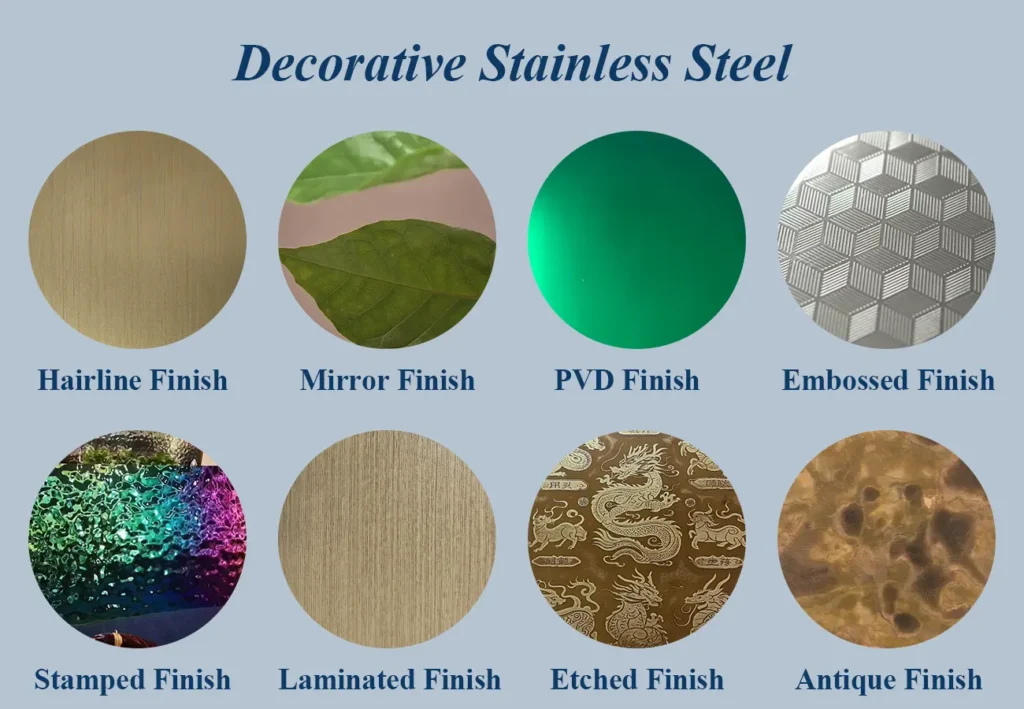
Mirror finish stainless steel features a highly reflective surface created through precision polishing. It is commonly used in elevator interiors, hotel lobbies, retail stores, and ceiling panels where designers want to create a brighter and more luxurious atmosphere.
Brushed stainless steel has fine directional lines on the surface, giving it a modern and clean appearance. Compared with mirror finish, brushed surfaces are less reflective and fingerprints are usually less visible, making them popular for commercial interiors and wall cladding.
Hairline finish stainless steel is similar to brushed stainless steel but typically features finer and more continuous surface lines. It is widely used in contemporary architectural projects, especially in elevator panels, column covers, and decorative wall systems.
Etched stainless steel is produced by chemically or mechanically creating decorative patterns on the metal surface. This finish is often used for custom decorative panels, luxury interiors, signage, and feature walls where unique patterns and textures are required.
Embossed stainless steel contains raised or textured patterns that add depth and visual character to the material. In addition to decorative purposes, embossed finishes can also help reduce the visibility of scratches and fingerprints in high-traffic environments.
PVD colored stainless steel is manufactured using Physical Vapor Deposition (PVD) technology to create durable decorative colors such as gold, black, bronze, champagne, and rose gold. PVD coatings are widely used in luxury architectural and interior design projects because they provide enhanced wear resistance and stable color performance.
Hammered stainless steel features textured surface patterns that create a handcrafted and decorative appearance. The uneven surface helps produce dynamic light reflections and adds visual depth, making hammered finishes popular for feature walls, bar counters, restaurant interiors, and luxury decorative applications.
Decorative stainless steel is widely used in modern commercial and architectural projects because it combines durability, low maintenance, and strong visual impact. Different finishes and colors can be selected according to the design style and functional requirements of each space.
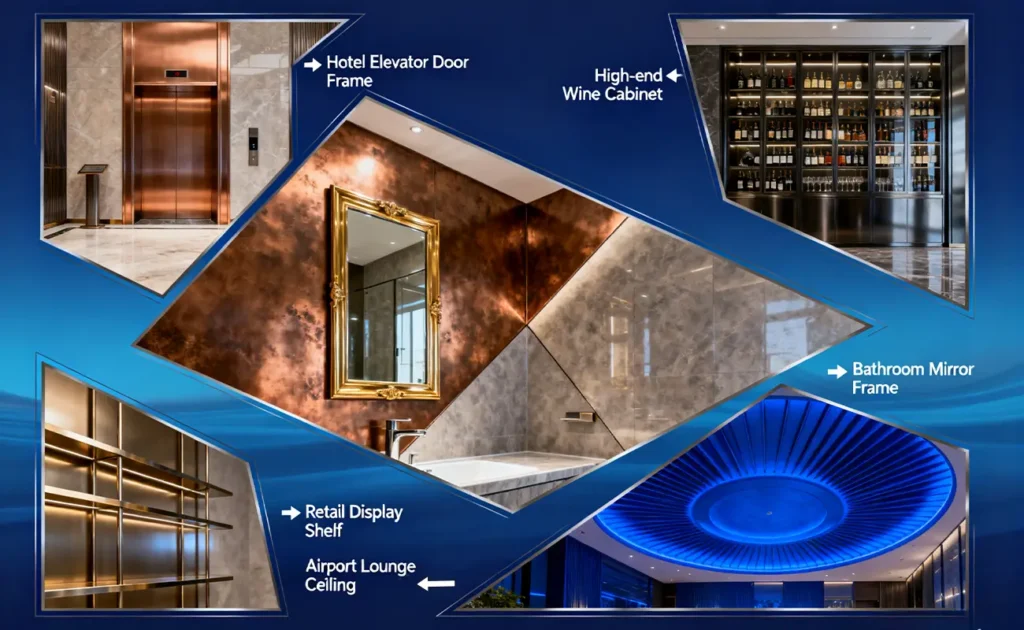
Decorative stainless steel is one of the most commonly used materials for elevator cabins, elevator doors, and control panel surrounds. Mirror, hairline, etched, and anti-fingerprint finishes are especially popular because they provide a modern appearance while maintaining durability in high-traffic environments.
Hotels and luxury hospitality projects often use decorative stainless steel in lobby walls, reception counters, ceilings, columns, elevator interiors, and decorative screens. PVD colored stainless steel finishes such as gold, bronze, black, and champagne are widely used to create premium and sophisticated interior spaces.
In retail environments, decorative stainless steel is frequently used for storefronts, display systems, wall panels, shelving details, and custom decorative features. Designers often select mirror or brushed finishes to enhance lighting effects and create a clean, contemporary atmosphere.
Decorative stainless steel panels are also used in wall cladding and architectural facade systems. Compared with many traditional decorative materials, stainless steel offers excellent corrosion resistance and long-term durability, making it suitable for both indoor and outdoor architectural applications.
Many commercial buildings use decorative stainless steel for ceiling panels, column covers, partition screens, and feature walls. Textured, embossed, and hammered finishes are especially effective for creating visual depth and decorative contrast within interior spaces.
Restaurants, bars, and entertainment venues often use decorative stainless steel to create modern and visually distinctive interiors. Decorative metal finishes can help combine durability with a luxury atmosphere, especially in high-use commercial environments where maintenance and long-term appearance are important.
In addition to its decorative appearance, decorative stainless steel is also valued for its functional performance in commercial and architectural environments. Different surface finishes, stainless steel grades, and coating technologies can influence corrosion resistance, scratch visibility, maintenance requirements, and long-term durability.
One of the main advantages of stainless steel is its corrosion resistance. Decorative stainless steel is commonly manufactured using grades such as 304 and 316 stainless steel, which provide good resistance to moisture, humidity, and many indoor environmental conditions. For outdoor or coastal applications, material selection is especially important because environmental exposure can affect long-term performance.
Scratch resistance is an important consideration in high-traffic commercial spaces such as elevators, hotels, airports, and retail stores. Textured finishes, embossed surfaces, and certain PVD coatings can help reduce the visibility of surface scratches during daily use. However, scratch resistance can vary depending on the finish type, application environment, and maintenance conditions.
Some decorative stainless steel finishes include anti-fingerprint coatings that help reduce visible smudges and fingerprints on the surface. These finishes are commonly used in elevator interiors, wall panels, doors, and public commercial areas where appearance and cleanliness are important.
Decorative stainless steel is widely used in commercial projects because of its strength, wear resistance, and long service life. Compared with many traditional decorative materials, stainless steel can maintain its appearance more effectively in high-use environments with frequent human contact.
Most decorative stainless steel surfaces can be cleaned using soft cloths and non-abrasive cleaning products. Proper maintenance can help preserve the appearance of decorative finishes and extend the service life of the material, especially in busy commercial environments.
Choosing the right decorative stainless steel depends on the project application, design style, and performance requirements. Different finishes, grades, and surface treatments can significantly affect both appearance and durability, so it is important to evaluate the material based on real project conditions rather than appearance alone.
The first factor to consider is where the material will be used. Indoor applications such as hotel lobbies, retail stores, and elevator interiors usually focus on aesthetics and lighting effects. In these environments, finishes like mirror, brushed, or PVD colored stainless steel are commonly selected.
For outdoor or semi-outdoor environments, corrosion resistance becomes more important. Stainless steel grades such as 304 or 316 are often chosen depending on exposure to humidity, pollution, or coastal conditions.
Surface finish has a direct impact on the visual style of the project. Mirror finishes are often used for luxury and high-reflection designs, while brushed and hairline finishes are preferred for modern and minimalist interiors. Textured finishes such as etched or hammered stainless steel are used when designers want more depth and visual character.
Material thickness should be selected based on the installation method and usage intensity. High-traffic environments such as elevators, shopping malls, and commercial buildings typically require thicker panels to ensure stability and long-term durability.
Different finishes require different levels of maintenance. For example, brushed and anti-fingerprint stainless steel surfaces are easier to maintain in public areas because they help reduce the visibility of smudges and scratches. Mirror finishes may require more frequent cleaning to maintain their reflective appearance.
Many architectural projects require custom colors, patterns, or surface textures. PVD coating, etching, and embossing processes allow stainless steel sheets to be customized according to specific design requirements, making them suitable for both standard and high-end bespoke projects.
Decorative stainless steel is mainly used for architectural and interior design applications, including elevator interiors, hotel lobbies, retail stores, wall cladding, ceilings, and commercial building decoration. It is selected for both its visual appearance and long-term durability in public and commercial environments.
Yes, decorative stainless steel can be used outdoors depending on the material grade and surface treatment. Grades such as 304 are suitable for general outdoor environments, while 316 stainless steel is recommended for coastal or high-corrosion areas. Proper finish selection and maintenance also affect long-term performance.
The best finish depends on the project design and function. Mirror finishes are often used for luxury and reflective designs, brushed and hairline finishes are preferred for modern interiors, while etched and hammered finishes are used for decorative texture and visual depth. PVD colored finishes are widely used in high-end architectural projects.
Decorative stainless steel has good surface durability, but like all metal materials, it can still be scratched under strong impact or improper use. Textured finishes, brushed surfaces, and protective coatings can help reduce the visibility of scratches in commercial environments.
Most decorative stainless steel surfaces can be cleaned using a soft cloth and mild cleaning agents. Abrasive materials or strong chemical cleaners should be avoided to protect the surface finish. Regular cleaning helps maintain appearance, especially in high-traffic commercial spaces.
Inquiry Now