
Gold Mirror Stainless Steel
Best suited to modern interiors that require a reflective gold appearance, stable color, easier cleaning, good fabrication performance, and consistent large-area installation.

Gold mirror stainless steel and brass can both create a warm, premium metallic appearance. However, they differ in surface consistency, corrosion resistance, maintenance, fabrication, cost, and long-term performance. This guide compares both materials to help architects, designers, contractors, and buyers choose the right option for modern interior projects.
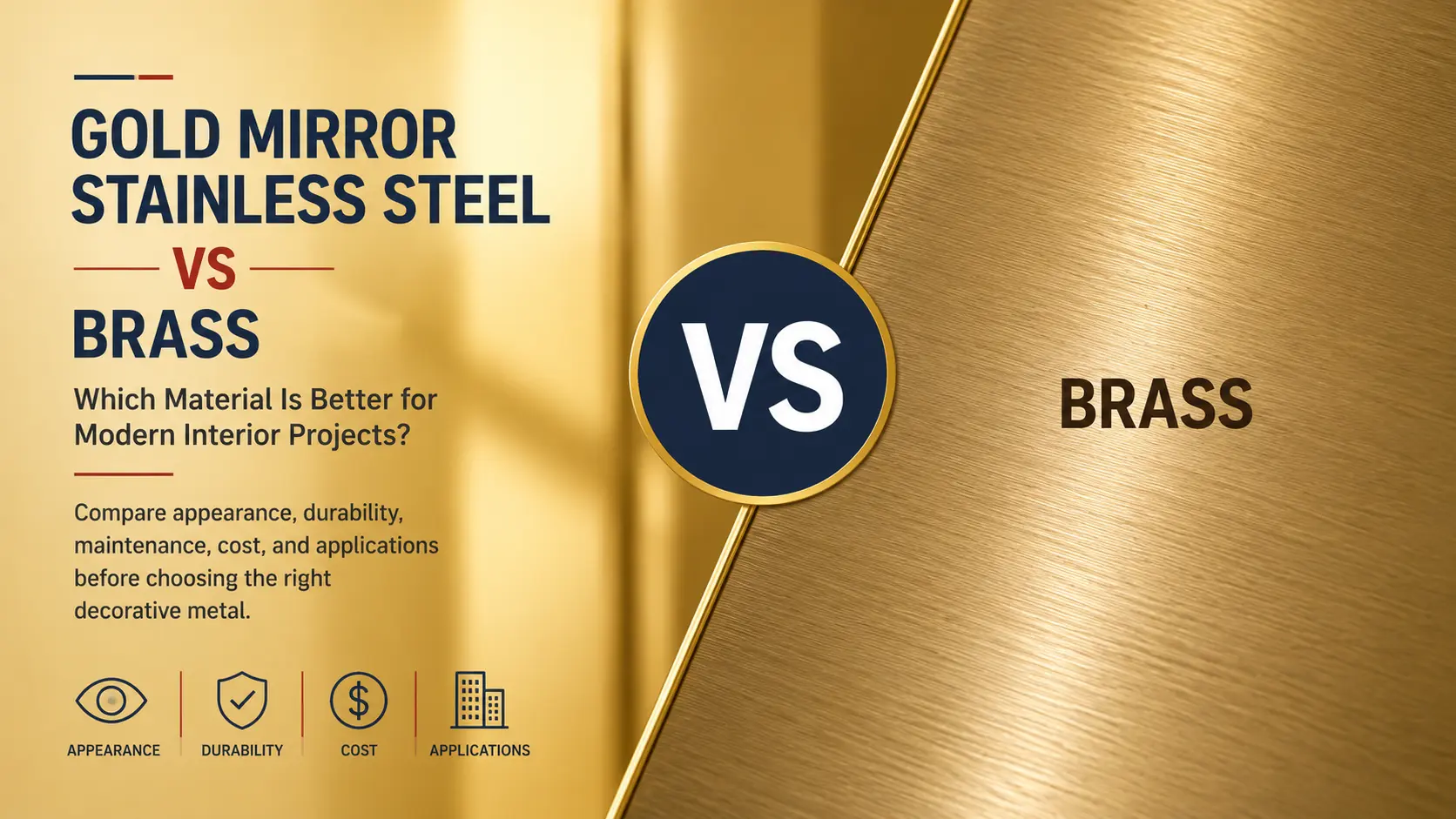
Both materials can create an attractive gold appearance, but their performance and maintenance requirements are different. For many modern commercial interiors, gold mirror stainless steel sheet offers a more consistent surface and easier long-term maintenance, while brass provides a natural, traditional metallic character.
Best suited to modern interiors that require a reflective gold appearance, stable color, easier cleaning, good fabrication performance, and consistent large-area installation.
Best suited to classic, traditional, heritage, or handcrafted designs where natural aging, patina, and the authentic character of solid brass are part of the intended appearance.
| Comparison Point | Gold Mirror Stainless Steel | Brass |
|---|---|---|
| Appearance |
Modern and highly reflective Creates a bright, clean, mirror-like gold surface with good color consistency. | Warm and natural metallic appearance. The surface may develop patina and visual variation over time. |
| Material Structure | Stainless steel base with a decorative gold PVD coating, normally produced on mirror-polished stainless steel. | A copper-zinc alloy with natural gold-yellow coloring throughout the material. |
| Corrosion Resistance |
Good for suitable environments Performance depends on stainless steel grade, coating quality, installation conditions, and maintenance. | Can oxidize, tarnish, or develop patina when exposed to air, moisture, chemicals, or frequent handling. |
| Maintenance | Usually cleaned with a soft cloth, water, or a mild neutral cleaner. It does not normally require regular polishing. | May require regular cleaning and polishing when the project needs to maintain a bright, new brass appearance. |
| Color Stability | Provides relatively consistent color when samples and production batches are properly controlled. | Natural color can change because of oxidation, polishing, surface treatment, and environmental exposure. |
| Fabrication | Suitable for laser cutting, bending, V-grooving, punching, panel fabrication, and many architectural applications. | Suitable for custom fabrication and detailed metalwork, but material handling and finishing costs may be higher. |
| Surface Options | Can be combined with mirror, hairline, etched, embossed, bead-blasted, and other decorative stainless steel finishes. | Can be polished, brushed, aged, oxidized, engraved, or handcrafted to create traditional decorative effects. |
| Typical Applications | Hotels, elevators, retail stores, restaurants, offices, feature walls, columns, ceilings, and commercial panels. | Heritage buildings, luxury residences, restaurants, signage, furniture details, decorative fittings, and custom metalwork. |
| Initial Cost | Often more cost-efficient for large decorative panels and commercial projects, depending on grade, thickness, and finish. | Solid brass can have a higher raw-material and fabrication cost, especially for large surfaces or complex parts. |
| Long-Term Cost |
Often lower maintenance cost Can provide good long-term value where easier cleaning and consistent appearance are important. | Maintenance, polishing, oxidation treatment, and replacement may increase the total cost over time. |
| Best Design Style | Modern, contemporary, minimalist, luxury commercial, and high-reflection interior designs. | Classic, traditional, vintage, heritage, handcrafted, and naturally aged design styles. |
Modern, bright, highly reflective, and visually consistent.
Warm, natural, and traditional, with possible patina over time.
Normally requires gentle cleaning but no regular polishing.
May require polishing and oxidation control to remain bright.
Good performance when the correct grade and coating are selected.
Durable, but exposed surfaces can tarnish, oxidize, and change color.
Hotels, elevators, retail interiors, feature walls, and large panels.
Heritage projects, furniture details, signage, and custom metalwork.
Often provides lower maintenance and more predictable long-term cost.
Polishing, surface restoration, and maintenance may raise total cost.
Choose gold mirror stainless steel when the project requires a modern reflective surface, consistent gold color, easier maintenance, and efficient installation across large areas. Choose brass when natural aging, patina, traditional character, or handcrafted metal details are central to the design concept.
Both materials can create a gold decorative effect, but they do not produce exactly the same visual result. Gold mirror stainless steel is usually brighter, smoother, and more reflective, while brass has a warmer natural color and a more traditional metallic character.
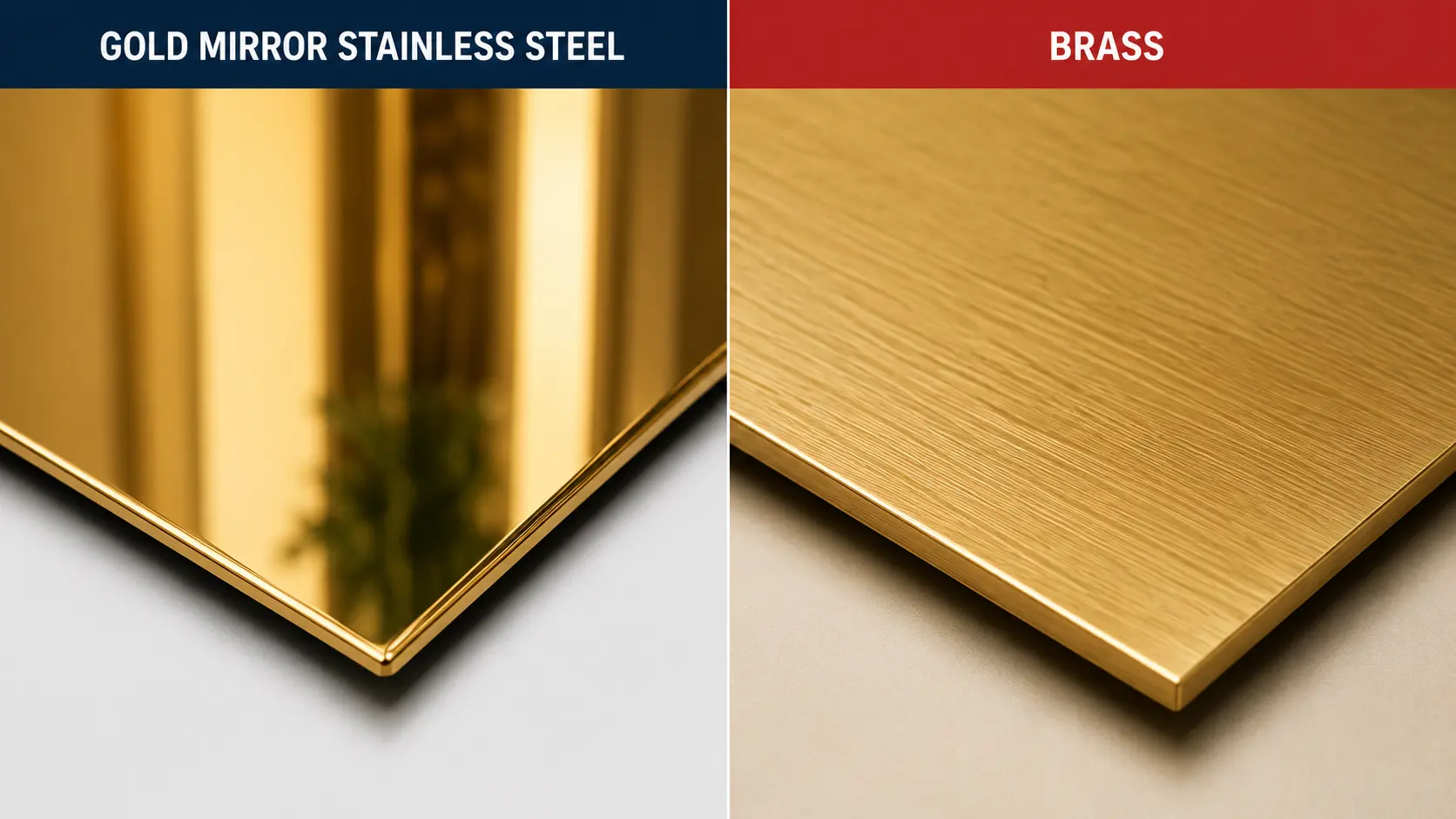
Gold mirror stainless steel is produced by applying a gold-colored PVD coating to a highly polished stainless steel surface. The mirror base creates strong reflections and a clean, contemporary appearance.
Brass is a copper-zinc alloy with a naturally warm gold-yellow color. Its appearance can change depending on polishing, brushing, oxidation, handling, and exposure to the surrounding environment.
Mirror stainless steel creates clearer and stronger reflections than most polished or brushed brass surfaces.
PVD stainless steel offers controlled gold shades, while brass has a warmer natural yellow-gold tone.
Brass may develop oxidation and patina. PVD stainless steel generally keeps a more stable decorative appearance.
Stainless steel feels modern and precise. Brass often feels classic, artisanal, warm, and traditional.
Lighting, camera settings, screens, surrounding materials, and reflection can change how a gold surface appears in a photo. Buyers should approve a physical sample under the actual project lighting before confirming the final material and production color.
No. Although the two materials may have a similar gold appearance, gold mirror stainless steel is not brass. They use different base materials, production methods, and surface technologies.
Gold mirror stainless steel normally uses a stainless steel sheet as the base material. The sheet is polished to a mirror finish and then coated with a decorative gold-colored PVD layer. Brass is a solid copper-zinc alloy whose gold-yellow color comes naturally from the material itself.
| Material Factor | Gold Mirror Stainless Steel | Brass |
|---|---|---|
| Base Material | Stainless steel | Copper-zinc alloy |
| Source of Gold Color | Decorative gold PVD coating | Natural alloy color |
| Surface Reflection | High mirror reflection created by the polished stainless steel base | Can be polished, but usually has a warmer and softer metallic reflection |
| Natural Oxidation | Stainless steel does not develop the same natural patina as exposed brass | Can tarnish, darken, or develop patina over time |
| Color Control | Gold shade can be controlled through approved PVD samples and production standards | Color may vary with alloy composition, polishing, oxidation, and surface treatment |
| Typical Sheet Grades | 201, 304, and 316 stainless steel | Different brass grades based on copper and zinc composition |
| Patina Effect | Not normally selected for natural patina development | Often selected specifically for natural aging and patina |
| Best Use | Modern commercial panels, elevators, hotels, retail stores, ceilings, columns, and feature walls | Traditional interiors, heritage projects, furniture details, fittings, signage, and handcrafted metalwork |
Two finished surfaces may look similar in project photos, but their raw materials, aging behavior, maintenance needs, and fabrication costs can be very different.
PVD gold is a thin decorative surface coating. It does not turn the stainless steel sheet into solid brass, and it should not be described as solid gold or solid brass.
The performance of gold mirror stainless steel depends not only on the PVD color, but also on the stainless steel grade, surface quality, fabrication process, installation, and environment.
When a project requires a consistent gold appearance across large wall panels, elevator interiors, columns, ceilings, or commercial cladding, a properly specified gold mirror stainless steel sheet is often more practical than solid brass. Brass remains a strong choice when natural alloy character, handcrafted details, or visible patina are part of the design concept.
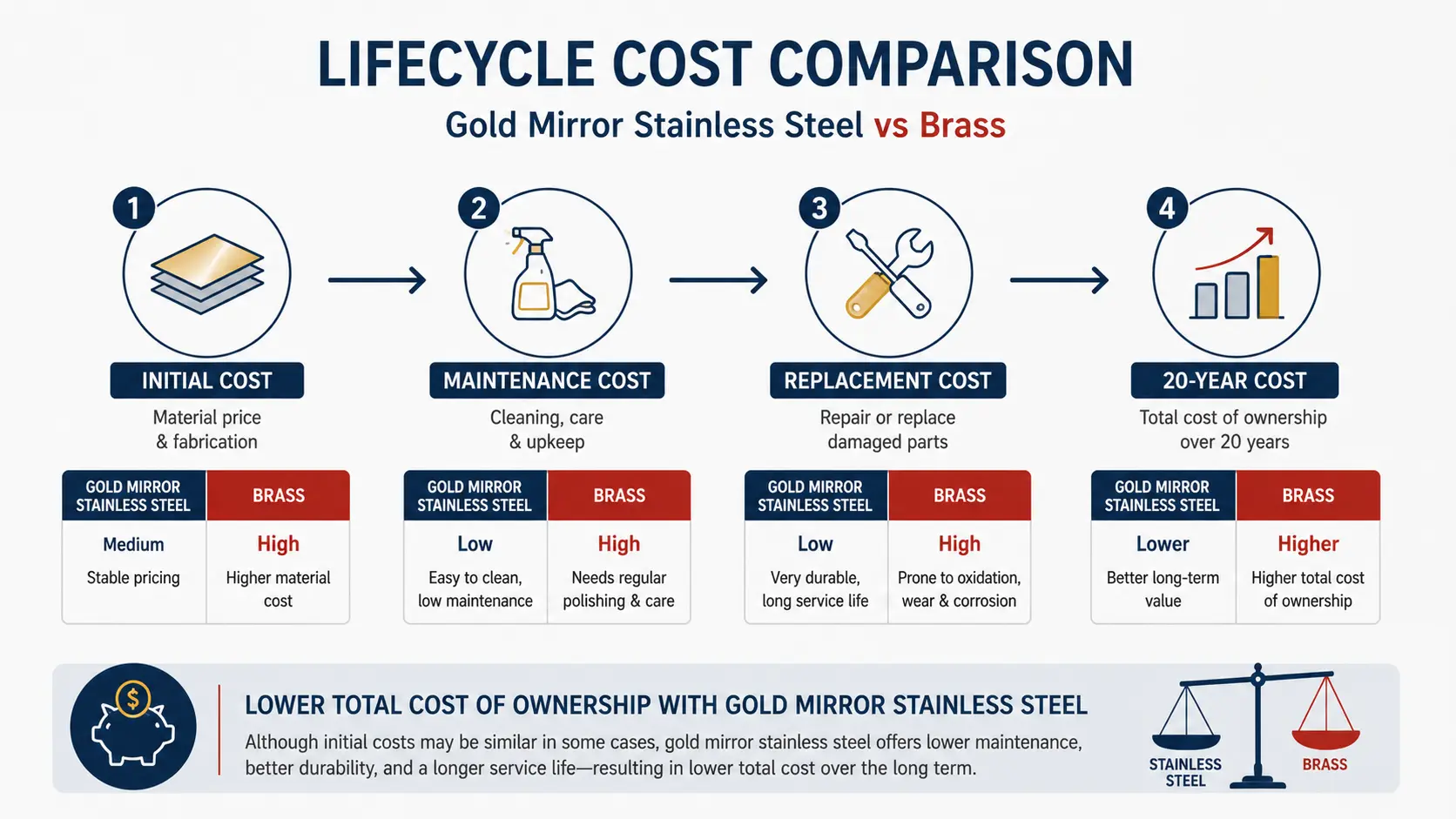
In many commercial projects, gold mirror stainless steel can be more cost-efficient than solid brass. However, buyers should compare the total lifecycle cost rather than looking only at the initial material price.
The lowest material quotation does not always create the lowest project cost. Large decorative installations may also require polishing, protective treatment, specialist fabrication, regular cleaning, surface restoration, and replacement of damaged panels.
The cost of the sheet or plate before fabrication, transport, and installation.
Cutting, bending, V-grooving, welding, polishing, edge treatment, and panel production.
Routine cleaning, polishing, oxidation control, surface protection, and professional maintenance.
Repairing or replacing panels that become damaged, discolored, or visually inconsistent.
Gold mirror stainless steel is often selected for large commercial surfaces because it combines a decorative gold appearance with efficient sheet fabrication and relatively low routine maintenance.
Brass can provide strong design value and an authentic natural metal appearance, but solid brass usually carries a higher material cost and may require more maintenance when a bright finish must be preserved.
| Cost Factor | Gold Mirror Stainless Steel | Brass |
|---|---|---|
| Raw Material |
Often lower for large surfaces
Cost depends on stainless steel grade, thickness, mirror quality, PVD color, size, and order quantity. |
Often higher
Solid brass pricing is strongly influenced by copper content, alloy grade, thickness, and metal market conditions. |
| Fabrication | Well suited to standard architectural sheet-metal processes and large panel production. | May require specialist polishing, surface protection, and more careful handling during detailed fabrication. |
| Installation | Can be fabricated into lightweight decorative panels, trims, folded sections, and elevator components. | Installation cost depends on thickness, weight, joining method, surface protection, and the complexity of custom details. |
| Routine Cleaning | Usually cleaned with soft cloths, clean water, or mild neutral cleaning products. | Cleaning may be simple for aged brass, but bright brass can require regular polishing and specialist care. |
| Oxidation Control | Does not normally require the same ongoing tarnish-control work as exposed brass. | May require lacquer, wax, polishing, or controlled maintenance to preserve the selected appearance. |
| Repair | Deep scratches on PVD mirror surfaces are difficult to repair locally. Panel replacement may be more practical. | Solid brass can often be repolished or refinished, but labor costs can be significant. |
| Long-Term Cost | Often more predictable where stable color and lower maintenance are important. | Can become more expensive when frequent polishing, restoration, or oxidation control is required. |
Gold mirror stainless steel often becomes more cost-efficient as the decorative surface area increases. Small custom brass details may remain practical when the quantity is limited.
Thicker solid metal increases raw-material weight and cost. Many decorative projects use stainless steel as a finished skin over a suitable support structure.
Mirror polishing, custom colors, etched patterns, embossing, aging, lacquering, and handcrafted details all influence the final price.
Flat sheets, folded panels, trims, curved sections, welded parts, and custom profiles require different equipment, labor, and quality control.
A hotel lobby that must remain bright and polished may have different maintenance costs from a restaurant that accepts natural brass patina.
High-traffic areas face greater risk from impact, scratching, chemical damage, and improper cleaning. Spare panels and batch consistency should be considered.
Gold mirror stainless steel is often the more practical option when hundreds of square meters need a consistent gold finish. Sheet fabrication is efficient, routine maintenance is simpler, and the material can be coordinated across wall panels, doors, trims, columns, and ceilings.
Brass may justify its higher initial and maintenance cost when the project requires authentic solid-metal character, natural aging, handcrafted detailing, decorative fittings, signage, or a traditional luxury appearance.
For large modern commercial interiors, gold mirror stainless steel usually offers a more predictable balance of material cost, fabrication efficiency, appearance consistency, and routine maintenance. Brass can still offer better design value when natural patina, authenticity, restoration, and handcrafted character are more important than minimizing the total lifecycle cost.
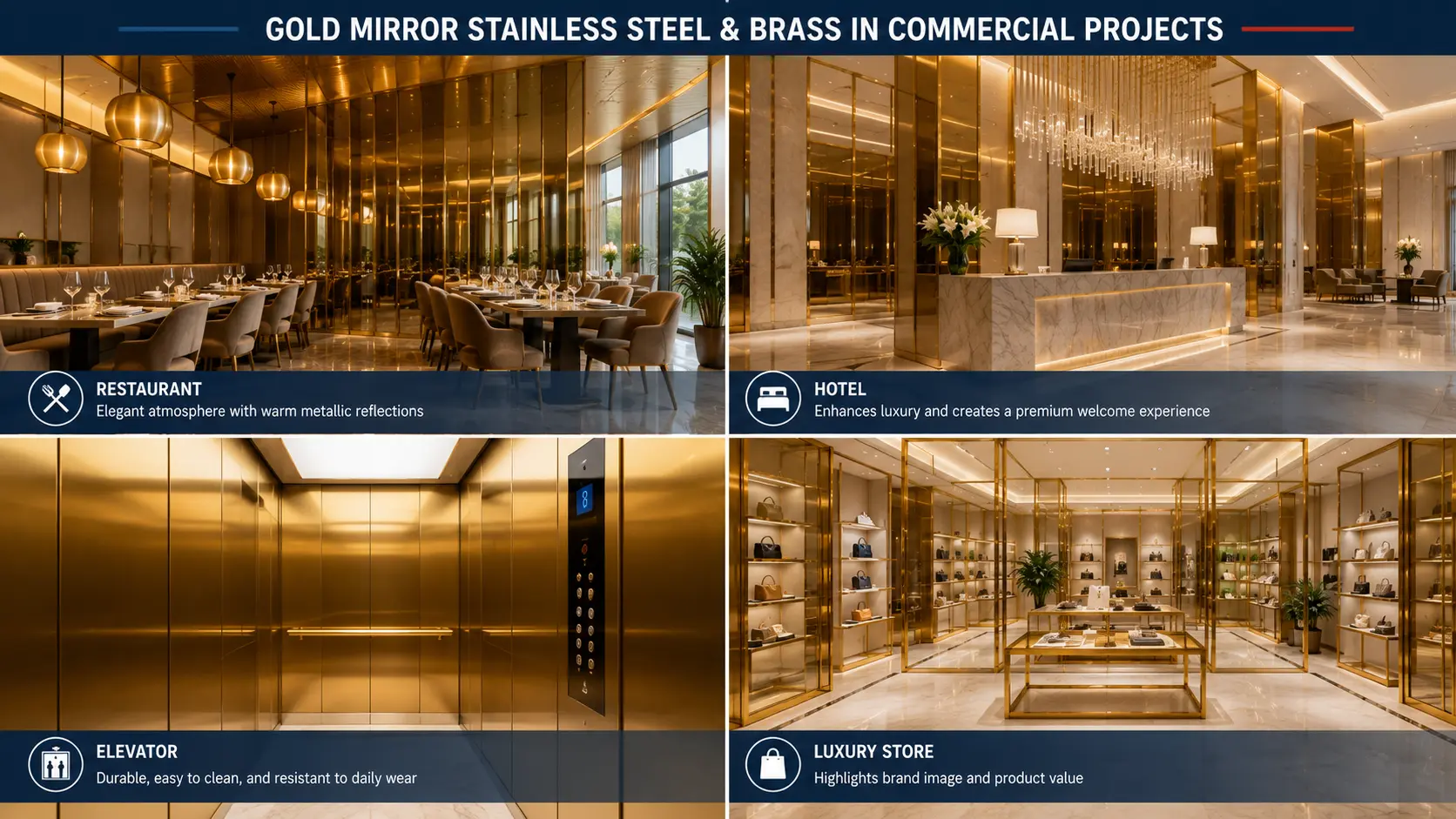
Both materials can create a premium gold appearance, but they are usually selected for different project sizes, design styles, maintenance requirements, and fabrication methods.
Gold mirror stainless steel is generally more practical for large, repeated, and highly reflective architectural surfaces. Brass is often stronger as a design choice for smaller decorative details, traditional interiors, handcrafted features, and projects where natural patina is part of the intended appearance.
Gold mirror stainless steel works especially well where the project needs a modern, reflective, consistent, and easy-to-coordinate surface across a larger installation.
Brass is often selected where natural metal character, visible aging, traditional luxury, custom craftsmanship, or authentic solid-metal details are central to the design.
Elevator interiors require sheet consistency, accurate fabrication, cleanable surfaces, and efficient replacement. Mirror PVD stainless steel is generally more practical for this application.
Gold Mirror Stainless SteelStainless steel is suitable for larger display surfaces, while brass can be used selectively for handles, logos, frames, and handcrafted brand details.
Both MaterialsLarge wall panels and columns usually favor gold mirror stainless steel because of fabrication efficiency, appearance control, and lower routine maintenance.
Gold Mirror Stainless SteelTraditional architecture and restoration projects may favor solid brass because its natural color, aging, and authenticity support the historic design language.
BrassModern restaurants often use PVD stainless steel for panels and counters. Brass may be preferred for bar details, lighting, trims, signs, and aged decorative features.
Both MaterialsBrass can provide authentic solid-metal details, while stainless steel offers a more consistent and economical finish for larger decorative furniture surfaces.
Both Materials| Application | Gold Mirror Stainless Steel | Brass |
|---|---|---|
| Elevator Interiors |
Strong fit
Efficient for doors, wall panels, ceilings, trims, control-panel surrounds, and repeated cabin production. |
Selective use
Better suited to small fittings, trims, handrails, signage, or custom luxury details. |
| Hotel Lobbies |
Strong fit
Suitable for large wall panels, columns, ceilings, reception areas, and high-impact decorative surfaces. |
Selective use
Ideal for handles, signage, furniture details, lighting parts, or areas designed to develop patina. |
| Retail Stores |
Strong fit
Provides consistent gold color for wall displays, counters, shelving, frames, and branded environments. |
Selective use
Effective for logos, handles, plaques, frames, and premium handcrafted accents. |
| Traditional Interiors | Can be used when the design requires a cleaner and more contemporary interpretation of a gold surface. |
Strong fit
Natural brass color, texture, and aging are well suited to classic, vintage, and heritage design styles. |
| Large Wall Areas |
Strong fit
More practical for repeated panel production, color matching, fabrication, installation, and routine maintenance. | Generally more expensive and maintenance-intensive when used over very large decorative surfaces. |
| Furniture Details | Suitable for larger panels, trims, folded parts, and decorative skins where cost and consistency are important. |
Strong fit
Excellent for solid details, inlays, handles, edges, legs, and handcrafted components. |
| Outdoor Applications | Possible only when the correct grade, PVD system, installation detail, and environmental suitability are confirmed. | Can be used outdoors, but oxidation, runoff, staining, patina, and maintenance must be accepted or controlled. |
Large decorative areas generally favor stainless steel. Small premium details may justify solid brass.
High-touch areas require careful consideration of fingerprints, scratches, cleaning, oxidation, and replacement.
Mirror stainless steel feels modern and precise. Brass feels warmer, more traditional, and naturally variable.
The approved material should match the cleaning staff, maintenance budget, and expected long-term appearance.
Choose gold mirror stainless steel when the project needs a modern reflective finish, large-area consistency, efficient sheet fabrication, and simpler routine maintenance. Choose brass when authentic alloy character, natural patina, traditional design, or handcrafted detailing is more important. Many premium interiors use both materials, with stainless steel for the main surfaces and brass for selected details.
Brass remains an important decorative metal, but gold mirror stainless steel is often easier to specify, fabricate, repeat, install, and maintain across large modern commercial projects.
Architects and buyers do not choose gold mirror stainless steel only because it looks luxurious. They also choose it because the material can support repeatable production, controlled color samples, architectural sheet fabrication, coordinated panel systems, and simpler long-term maintenance.
Hotels, shopping malls, elevator projects, retail stores, and office buildings may require hundreds of square meters of decorative metal. Stainless steel sheets are generally more practical than solid brass for large wall panels, columns, ceilings, doors, and cladding.
Approved physical samples can be used to control the gold shade, mirror quality, surface direction, and overall appearance before bulk production. This helps reduce visible differences across repeated panels and project areas.
Gold mirror stainless steel can be laser cut, sheared, V-grooved, bent, folded, welded, and fabricated into panels, trims, profiles, doors, column covers, and other architectural components.
PVD gold stainless steel does not require the same regular polishing and tarnish-control routine as exposed bright brass. This can reduce maintenance work in hotels, elevators, retail interiors, and other public spaces.
The gold color can be combined with mirror, hairline, satin, etched, embossed, bead-blasted, or patterned surfaces. This gives designers more flexibility while keeping the same stainless steel material system.
A project can use matching or coordinated gold finishes on wall panels, elevator doors, ceilings, trims, screens, counters, columns, signage, and furniture details from the same approved sample range.
A successful decorative metal specification must work for the design team, fabricator, installer, building operator, and purchasing team.
The final order should follow a physical sample rather than a screen image. Lighting, camera settings, reflection, and monitor differences can change the visible gold tone.
The supplier should control raw material, polishing quality, PVD color, surface inspection, protective film, packaging, and batch identification throughout production.
Sheet thickness, dimensions, bending direction, V-grooving, welding areas, corner details, and protective-film requirements should be confirmed before fabrication begins.
Large projects may require phased deliveries, replacement panels, additional quantities, or future expansion. Production records and retained samples can support better matching.
Decorative mirror sheets need protective film, corner protection, moisture control, stable wooden packing, and careful loading to reduce damage during international transport.
Clear confirmation of grade, thickness, finish, color, size, quantity, application, fabrication method, and project environment helps prevent costly misunderstandings.
Large decorative projects should move from visual selection to technical confirmation in a controlled sequence.
Confirm whether the material is for elevators, walls, columns, ceilings, furniture, doors, trims, or another use.
Choose 201, 304, or 316 stainless steel according to the environment, performance requirement, and budget.
Confirm the physical gold color, mirror quality, finish direction, and surface appearance under project lighting.
Review thickness, sheet size, bending, V-grooving, welding, cutouts, profiles, edge details, and protection requirements.
Keep the approved sample, batch information, inspection standard, packing method, and spare-material plan with the order.
| Commercial Requirement | Gold Mirror Stainless Steel | Brass |
|---|---|---|
| Large Surface Coverage |
Usually more practical
Suitable for repeated sheet production, large panels, columns, elevator interiors, ceilings, and commercial wall systems. |
Better for selective areas
Often reserved for smaller premium details because of material, finishing, and maintenance costs. |
| Modern Mirror Appearance |
Strong choice
Provides a clean, precise, and highly reflective gold surface for contemporary interiors. | Can be polished, but the reflection is generally warmer and may change as the surface oxidizes or develops patina. |
| Color Consistency | Approved samples and controlled PVD production can support more consistent large-batch appearance. | Alloy composition, polishing, oxidation, handling, and surface treatment may create more natural variation. |
| Routine Maintenance |
Usually simpler
Does not normally require regular polishing to control natural tarnishing. | Bright brass may require polishing, lacquer maintenance, or controlled aging to preserve the selected appearance. |
| Natural Patina | Not normally selected when natural oxidation and patina are the main design objective. |
Strong choice
Suitable when natural darkening, variation, and aging are part of the design concept. |
| Custom Handcrafted Details | Suitable for fabricated sheet-metal parts, folded trims, panels, profiles, screens, and architectural components. |
Strong choice
Excellent for solid fittings, engraved signs, handles, inlays, furniture parts, and handcrafted features. |
The final performance still depends on the stainless steel grade, mirror-polishing quality, PVD coating, fabrication method, installation environment, cleaning products, protective-film handling, and surface care. Deep scratches and fabrication damage on a mirror PVD surface can be difficult to repair locally, so prevention is essential.
Chroma Steel supplies decorative gold mirror stainless steel sheets for elevators, hotels, retail stores, restaurants, commercial buildings, wall panels, columns, ceilings, and custom metal fabrication. Share your required grade, thickness, size, finish, quantity, and application so our team can help you confirm a suitable specification.
Many purchasing problems happen before production begins. A clear specification, approved physical sample, and complete fabrication information can prevent color disputes, surface damage, unexpected costs, and project delays.
Gold color can look very different under various lights, cameras, screens, and surrounding materials. Two quotations may also describe completely different stainless steel grades, thickness tolerances, mirror quality, PVD processes, protective films, packaging standards, and quality-control levels.
Website photos, phone images, and digital color charts cannot fully show the true gold tone, brightness, reflection, or color change under different project lighting.
The delivered sheets may look warmer, lighter, darker, or more yellow than expected.
Approve a physical sample under the actual lighting and beside nearby stone, glass, wood, paint, and fabric.
A low quotation may use a different base grade, thinner material, lower mirror quality, lighter protective film, or less demanding packaging and inspection standards.
The cheaper sheet may not meet the required appearance, fabrication performance, or project environment.
Compare grade, thickness, tolerance, finish, size, film, packing, coating standard, quantity, and inspection requirements line by line.
The gold PVD coating creates the decorative color, but the stainless steel grade remains important for corrosion resistance, fabrication, service life, and project suitability.
A low-cost base grade may perform poorly in humid, coastal, chemical, food-service, or demanding public environments.
Confirm whether 201, 304, or 316 stainless steel is appropriate for the actual installation conditions.
Nominal thickness alone does not describe the complete material. Actual thickness tolerance affects weight, stiffness, bending, flatness, fabrication, and final cost.
Thin sheets may deform, show waves, or fail to match the intended panel structure and fabrication method.
Specify nominal thickness, acceptable tolerance, panel structure, support method, and final fabricated dimensions.
“Mirror finish” is a broad description. Surface flatness, polishing lines, waviness, clarity, distortion, pinholes, and base-sheet quality all affect the final reflection.
The gold color may be acceptable, but the surface reflection may look uneven, cloudy, distorted, or lower in quality.
Approve both the gold shade and the mirror-polishing standard on a representative production sample.
Mirror surfaces reflect the surrounding space. Different panel directions, rotations, bends, and layouts can make matching sheets appear visually different after installation.
Adjacent panels may reflect light differently, creating an inconsistent appearance even when they come from the same batch.
Mark the installation direction, panel number, bending direction, and layout before cutting and fabrication.
Mirror PVD surfaces are vulnerable to scratches, grinding dust, welding sparks, cement, adhesive, tools, and rough handling during workshop production and site installation.
Surface damage may only become visible after installation, when repair or replacement is already expensive.
Keep the film in place as long as practical and protect exposed edges, corners, cutouts, bends, and welded areas.
Decorative metal projects may need extra sheets for fabrication loss, site damage, future repairs, color matching, phased installation, or unexpected design changes.
A later replacement order may have a small visual difference from the original production batch.
Include a reasonable spare quantity and retain the approved sample, batch records, and panel identification information.
A complete request for quotation allows suppliers to quote the same material standard and reduces unnecessary price differences.
Specify 201, 304, 316, or ask the supplier to recommend a grade based on the project environment.
Include nominal thickness and acceptable tolerance when the project has structural or fabrication requirements.
Confirm width, length, quantity, whether custom sizes are required, and whether sheets will be cut before delivery.
State mirror, hairline, satin, etched, embossed, or another required decorative finish.
Use a physical sample, supplier sample code, or clearly approved reference rather than only a photo.
Explain whether the sheets are for elevators, walls, ceilings, columns, furniture, doors, trims, or outdoor use.
Include bending, V-grooving, laser cutting, welding, punching, profiles, cutouts, or pre-fabricated panel requirements.
Confirm film type, laser-compatible film if required, adhesive performance, and expected storage or processing time.
Request export-safe wooden packing, moisture protection, corner protection, pallet limits, and loading requirements.
| Comparison Point | What to Confirm | Why It Matters |
|---|---|---|
| Material Grade | Base stainless steel specification Confirm whether the quotation is based on 201, 304, or 316 and whether a material certificate is available. | Different grades affect corrosion resistance, price, fabrication, and suitability for the project environment. |
| Actual Thickness | Nominal and measured tolerance Ask whether the quotation is based on full thickness, standard tolerance, or a lower commercial tolerance. | Thickness differences affect weight, rigidity, flatness, fabrication, and final price. |
| Mirror Standard | Reflection clarity and polishing quality Review waviness, polishing marks, distortion, surface defects, and approved visual standards. | Two sheets described as “mirror” can have significantly different visual quality. |
| PVD Color | Physical sample and batch control Confirm the approved sample, target shade, bulk tolerance, and procedure for handling color differences. | Gold tone can vary with coating process, substrate, polish, lighting, and production batch. |
| Protective Film | Film thickness and application Check whether the film supports laser cutting, bending, storage, and long-distance transport. | Poor film can peel too early, leave adhesive, or fail to protect the mirror PVD surface. |
| Inspection | Quality-control standard Confirm inspection for color, scratches, pinholes, flatness, dimensions, surface quality, and packaging. | Decorative sheets require more visual control than ordinary industrial stainless steel. |
| Packaging | Export and unloading protection Review pallet design, moisture protection, corner protection, bundle weight, lifting points, and container loading. | Even correctly produced sheets can be damaged by poor packing, transport, unloading, or storage. |
Before ordering gold mirror stainless steel sheets , confirm the base grade, thickness, sheet size, gold shade, mirror quality, fabrication process, application, protective film, packing, and inspection standard. A clear specification makes quotations easier to compare and helps reduce quality disputes after delivery.
These answers cover the most common questions from architects, interior designers, contractors, fabricators, and buyers comparing gold mirror stainless steel with brass.
The right choice depends on the required appearance, surface area, project style, fabrication method, installation environment, maintenance plan, and total budget. A physical material sample should always be approved before bulk production.
No. Gold mirror stainless steel is not brass. It normally uses a stainless steel base, a polished mirror surface, and a decorative gold PVD coating. Brass is a copper-and-zinc alloy with a natural gold-toned color throughout the material.
The two materials can look similar from a distance, but they differ in composition, aging, maintenance, fabrication, cost, and long-term appearance.
Gold mirror stainless steel can create a brass-like gold appearance, especially when a warmer PVD shade is selected. However, it usually looks cleaner, brighter, more reflective, and more uniform than natural brass.
Brass normally has a warmer and more organic visual character. Its surface can also darken or develop patina over time. For accurate selection, compare physical samples under the final project lighting.
Both materials can be durable when correctly specified. Gold mirror stainless steel generally provides good corrosion resistance and a more stable visual appearance in suitable interior environments. Brass is a durable solid alloy, but its exposed surface naturally oxidizes and changes color.
Final performance depends on the base grade, material thickness, surface finish, fabrication quality, installation conditions, cleaning method, and level of physical contact.
Gold PVD stainless steel does not normally tarnish in the same way as exposed brass because the visible gold color is produced by a decorative coating over stainless steel.
However, this does not mean the surface is impossible to damage. Strong chemicals, abrasive cleaners, salt exposure, poor fabrication, deep scratches, unsuitable base material, and aggressive environments can still affect performance.
In many large commercial projects, gold mirror stainless steel is more economical than solid brass. It is commonly selected for wall panels, elevator interiors, columns, ceilings, doors, trims, and other large decorative areas.
The total cost still depends on:
Gold mirror stainless steel is usually more practical for large hotel surfaces such as lobby walls, columns, elevator doors, reception desks, ceilings, screens, and decorative wall panels. It offers consistent color, efficient sheet fabrication, and simpler routine maintenance.
Brass is often used for smaller premium details such as handles, signs, furniture trims, lighting parts, rails, plaques, and custom handcrafted features. Many luxury hotels use both materials in the same project.
Yes. Gold mirror stainless steel is widely used for elevator cabin walls, landing doors, ceiling panels, trims, control-panel surrounds, entrance frames, and decorative feature panels.
Elevator applications require careful control of mirror quality, flatness, sheet direction, bending, scratches, fingerprints, protective film, and panel installation. Etched or patterned sections can also be added to reduce the visibility of fingerprints and minor surface marks.
Outdoor use may be possible, but it should not be assumed automatically. The stainless steel grade, PVD coating system, climate, coastal exposure, pollution, rainwater drainage, installation details, cleaning plan, and supplier recommendations must all be reviewed.
For demanding exterior or coastal environments, 316 stainless steel may be more suitable than 304 or 201, but the complete material system still requires project-specific confirmation.
Light surface marks may sometimes be cleaned, but deep scratches on a mirror PVD surface are difficult to repair locally. Polishing or recoating only one area can create visible differences in reflection, texture, and gold color.
Prevention is usually more effective than repair. Keep the protective film in place during fabrication and installation, avoid abrasive tools, and consider ordering spare sheets from the original production batch.
For routine cleaning, use a clean microfiber cloth, clean water, or a mild neutral cleaner. Wipe gently and dry the surface afterward to reduce streaks and water marks.
Avoid steel wool, abrasive pads, rough brushes, grinding materials, strong acids, bleach, alkaline cleaners, abrasive polishing compounds, and unknown chemical products. Test any cleaner on a spare sample or hidden area first.
The appropriate grade depends on the project environment and budget. Grade 304 is commonly used for interior architectural and decorative applications. Grade 316 may be selected for coastal, humid, chemical, or more demanding environments. Grade 201 can be used for some cost-sensitive indoor projects where conditions are less demanding.
The final selection should consider corrosion risk, fabrication, service life, local standards, and the client's technical requirements.
Buyers should provide and confirm the following information before bulk production:
You can review Chroma Steel's gold mirror stainless steel sheet or contact our team with your project specifications.
The project needs large-area coverage, modern mirror reflection, controlled gold color, efficient sheet fabrication, repeated panel production, and lower routine maintenance.
The project needs authentic solid-alloy character, traditional luxury, natural patina, handcrafted details, restoration potential, or a warmer and more naturally variable appearance.
Send Chroma Steel your application, stainless steel grade, required thickness, dimensions, quantity, surface finish, gold color reference, and fabrication requirements. Our team can help you evaluate whether gold mirror stainless steel is suitable for your elevator, hotel, retail, restaurant, or architectural project.
Inquiry Now