Liquid metal is a special coating that makes furniture and interior surfaces look like real metal. It can be used on many materials, such as wood, tiles, and stainless steel. This coating is popular in both commercial spaces and custom furniture projects.
This article explains in simple terms what liquid metal is, how it works, where it can be used, and its main advantages and limitations.
In furniture and interior design, liquid metal does
In furniture and interior design, liquid metal does not mean real molten metal.
Liquid metal usually refers to liquid metal coating, a decorative surface material made from:
Real metal powder (such as copper, brass, bronze, stainless steel, aluminum, or iron)
A resin-based binder
The material is applied to a surface in liquid form and then hardened. After curing, the surface can be polished, brushed, or textured, just like solid metal.
Because it contains real metal, the finished surface looks and feels much more realistic than normal metallic paint.
mean real molten metal.
Liquid metal usually refers to liquid metal coating, a decorative surface material made from:
Real metal powder (such as copper, brass, bronze, stainless steel, aluminum, or iron)
A resin-based binder
The material is applied to a surface in liquid form and then hardened. After curing, the surface can be polished, brushed, or textured, just like solid metal.
Because it contains real metal, the finished surface looks and feels much more realistic than normal metallic paint.
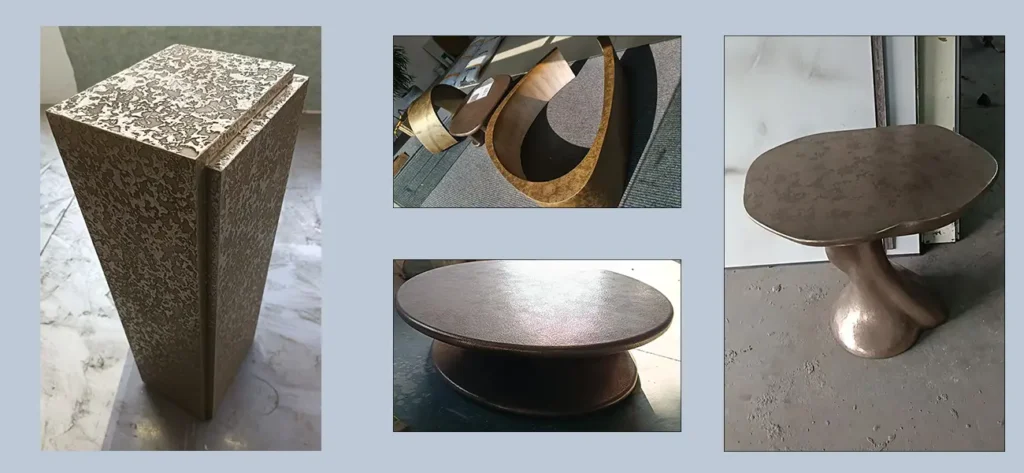
The basic process of liquid metal coating is usually:
Surface preparation of the base material (wood, MDF, metal, stone, etc.)
Spraying or troweling the liquid metal coating onto the surface
Curing and drying
Mechanical finishing such as sanding, brushing, or polishing
Since the top layer contains real metal particles, it can be physically processed after curing. This is the key difference between liquid metal and ordinary paint.
Different metal powders create different visual effects. Common liquid metal finishes include:
Liquid Copper / Brass / Bronze
Warm tones, often used for decorative furniture, wall panels, and feature areas. Oxidized or antique effects are possible.
Liquid Stainless Steel
Modern and industrial appearance. Brushed or matte finishes are common.
Liquid Aluminum
Light color, suitable for minimalist and contemporary interiors.
Liquid Iron
Can be treated to create controlled rust effects for artistic design.
Final color and texture may vary depending on the formula and finishing method.
One important feature of liquid metal is that it can be applied to many different base materials, not only metal.
Common base materials include:
Wood and plywood
MDF and other engineered boards
Stainless steel and other metals
Stone and artificial stone
Tiles and ceramic surfaces
Glass and composite materials
This flexibility allows designers to achieve a real metal appearance on surfaces that would otherwise be difficult or expensive to fabricate from solid metal.
Cabinet doors and furniture panels
Tabletops and coffee tables
Display cabinets and retail fixtures
Decorative trims and details
Feature walls and background walls
Reception desks and counters
Columns and elevator lobbies
Hotels, retail stores, and commercial interiors
Another key advantage of liquid metal is its ability to cover curved and complex shapes, which can be difficult for solid metal sheets.
High design flexibility
Real metal appearance and texture
Can be applied on many base materials
Suitable for curved and irregular surfaces
Surface durability is usually lower than solid metal sheets
Large-area applications require good process control
Color and texture may vary slightly between batches
For these reasons, liquid metal is often used for visual focal areas rather than high-wear surfaces.
| Aspect | Liquid Metal | Decorative Stainless Steel |
|---|---|---|
| Material type | Surface coating | Solid metal sheet |
| Shape flexibility | Very high | Limited by fabrication |
| Visual consistency | Medium | Very high |
| Surface durability | Medium | Very high |
| Typical use | Design highlights | Large areas, functional surfaces |
In many interior projects, liquid metal and stainless steel are used together, each serving a different purpose.
Liquid metal is commonly used in:
High-end custom furniture
Retail and showroom interiors
Hotels and hospitality spaces
Design-focused commercial projects
Understanding the material characteristics helps designers and project owners make better decisions during the design stage.
Inquiry Now