Stainless steel and quartz are two of the most commonly used materials for kitchen countertops.
Both materials are widely used in homes, restaurants, and commercial kitchens. However, they are designed for different needs and environments.
Stainless steel is often used in professional kitchens because of its durability and hygiene. Quartz is more commonly used in residential kitchens for its appearance and color options.
In this article, we compare stainless steel and quartz countertops in terms of durability, maintenance, and real kitchen performance.
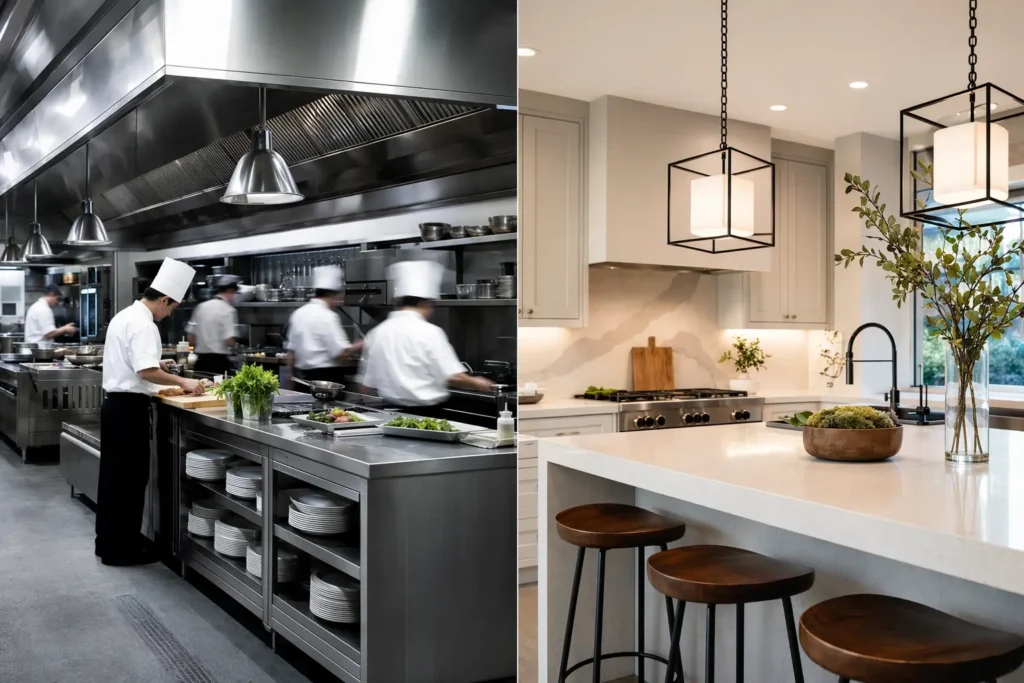
Stainless steel is a strong and practical material widely used in commercial kitchens, food factories, and industrial workspaces.
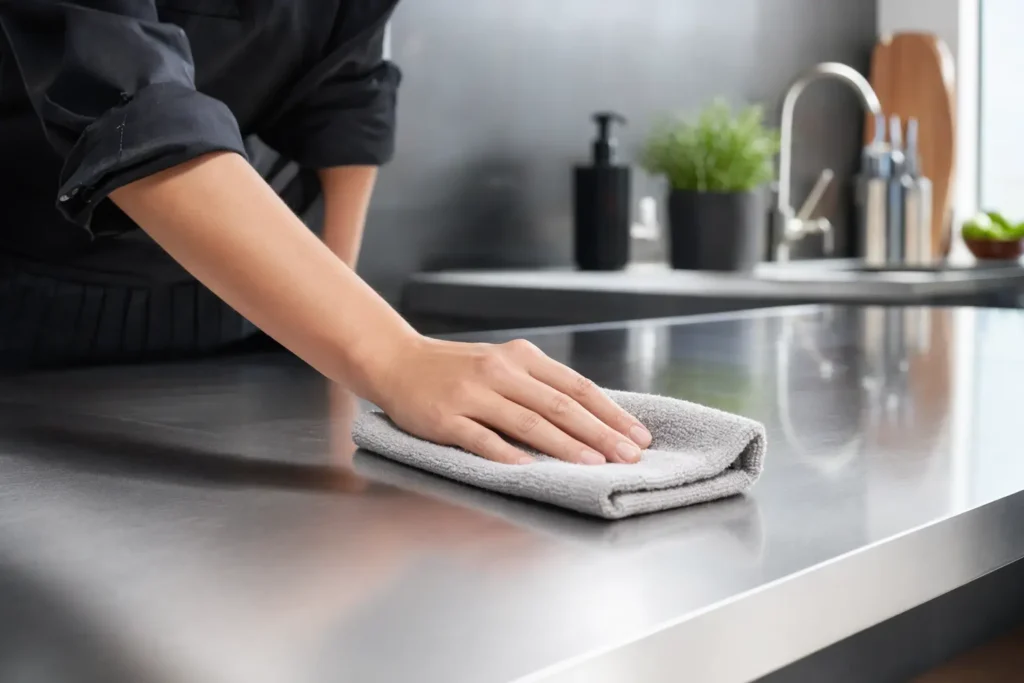
It has a smooth, non-porous surface that is easy to clean and maintain. It is also resistant to heat and moisture, which makes it suitable for heavy-use environments.
However, stainless steel surfaces can show scratches over time, depending on the finish and usage conditions.
For kitchen countertops, especially in commercial environments, stainless steel is often chosen for its long-term performance and hygiene advantages.

Quartz is an engineered stone material that is commonly used in residential kitchen countertops.
It offers a wide range of colors and patterns, making it popular for interior design projects where appearance is important.
Quartz is hard and durable, but it is more sensitive to high heat compared to stainless steel. In some cases, it may also be affected by stains or chemical exposure if not properly maintained.
Overall, quartz is mainly chosen for its aesthetic value and design flexibility.
When comparing durability, both materials perform well, but in different ways.
Stainless steel:
Quartz:
In high-traffic or commercial kitchens, stainless steel is often considered more reliable for long-term use.
Both materials are relatively easy to clean, but their maintenance requirements are different.
Stainless steel:
Quartz:
For environments that require strict hygiene, stainless steel is often preferred.
The answer depends on the type of kitchen and how the surface will be used.
For commercial kitchens, restaurants, and food preparation areas, stainless steel is usually the better choice. It performs well under heavy use and is easy to maintain.
For residential kitchens, both materials can be suitable. Quartz is often chosen for its appearance, while stainless steel is selected for durability and functionality.
In many professional applications, stainless steel kitchen countertops remain a more practical long-term solution.
👉 For durable solutions, you can explore anti-scratch stainless steel countertop sheets designed for kitchen environments.
Stainless steel and quartz are both good countertop materials, but they serve different purposes.
Quartz is mainly used for residential kitchens where design and appearance are important.
Stainless steel is widely used in commercial kitchens because it is durable, hygienic, and easy to maintain.
If your project requires long-term performance in a high-use environment, stainless steel is often the more practical choice.
It depends on usage. Stainless steel is better for commercial kitchens, while quartz is more common in residential kitchens.
Stainless steel performs better in high-heat and heavy-use environments, while quartz is better for decorative applications.
Both are easy to clean, but stainless steel does not require sealing and is more suitable for hygienic environments.
Stainless steel can scratch over time, but textured finishes and anti-scratch surfaces can reduce visible marks.
Inquiry Now