+86 15073108726

8:00 am - 18:00 pm

info@chromasteel.com

Send us your request

Super Mirror Stainless Steel: No.8 / 8K Mirror Finish Guide

Super Mirror Stainless Steel Guide

Super mirror stainless steel is a highly polished decorative stainless steel surface designed to create a bright, mirror-like reflection.

It is commonly specified as No.8 mirror finish, while terms such as 8K mirror stainless steel and Super Mirror are also widely used in the decorative stainless steel market.

Unlike brushed, hairline or satin finishes, mirror stainless steel is progressively polished and buffed to reduce visible directional lines and create a smooth, highly reflective surface. However, not every sheet marketed as “8K” or “Super Mirror” provides the same reflection quality.

Base-sheet flatness, polishing consistency, surface defects, sheet thickness, fabrication and installation can all affect the final appearance. For architectural projects, it is therefore important to evaluate the actual surface quality rather than relying only on the finish name.

In this guide, we explain what Super Mirror, No.8 and 8K stainless steel mean, how mirror quality is evaluated, how the finish is produced from a 2B stainless steel sheet, and how to choose the right specification for architectural and decorative applications. If you are looking for available grades, thicknesses, sheet sizes and decorative colors, see our Mirror Stainless Steel Sheet product page.

  • Super Mirror, No.8 and 8K terminology
  • How to evaluate mirror surface quality
  • Mirror polishing process from 2B sheet
  • Grades, thicknesses and specification factors
  • Architectural applications and PVD colors
  • Physical sample and quality approval guidance

Mirror finish Stainless steel Super Mirror Stainless Steel (No.8 Finish): The Ultimate Guide for Architects and Designers
Mirror Finish Basics

What Is Super Mirror Stainless Steel?

Super mirror stainless steel is a mechanically polished stainless steel surface with very high reflectivity and a smooth, non-directional appearance.

In stainless steel surface-finish terminology, No.8 finish refers to a highly polished mirror surface produced using progressively finer abrasives followed by buffing. In the decorative stainless steel market, terms such as 8K mirror, 8K stainless steel and Super Mirror are also commonly used for premium mirror-polished sheets.

However, these commercial descriptions do not always represent identical surface quality from every supplier. Two sheets both sold as “8K” may show different levels of reflection clarity, flatness, polishing marks, orange peel or surface distortion.

For architectural projects, buyers should therefore evaluate the actual surface together with the finish name. Important factors include base-sheet flatness, polishing consistency, surface defects, sheet thickness, fabrication and the approved reference sample.

If you are looking for available grades, thicknesses, dimensions and PVD colors, see our Mirror Stainless Steel Sheet product page.

Important: the words “8K” or “Super Mirror” alone should not be treated as a guarantee of identical reflection quality. For projects where visual appearance is critical, surface inspection and physical sample approval are more reliable than the finish name alone.
Mirror Finish Quality

How to Evaluate Super Mirror Stainless Steel Quality

The term “Super Mirror” or “8K mirror” alone does not guarantee that every stainless steel sheet will have the same visual quality. For architectural applications, buyers should evaluate the actual surface, reflection and sheet condition rather than relying only on the finish name.

01

Reflection Clarity

A high-quality super mirror stainless steel surface should produce a clear and consistent reflection.

Inspect the sheet from different viewing angles and distances. Excessive waviness or uneven reflection can be related to base sheet flatness, polishing consistency or subsequent fabrication.

Reflection quality is especially important for large wall panels, elevator interiors, columns and other highly visible architectural applications.

02

Surface Flatness

The flatness of the stainless steel base sheet directly affects the final mirror appearance.

Even a well-polished surface can show visual distortion when the sheet itself is not sufficiently flat.

For large continuous panels, flatness and mirror quality should therefore be evaluated together rather than treated as completely separate specifications.

03

Polishing Marks

Check the super mirror surface under strong directional lighting, where polishing inconsistencies are easier to identify.

  • Visible grinding lines
  • Swirl marks
  • Uneven polishing
  • Cloudy areas
  • Local differences in gloss

Minor surface differences are generally more noticeable on mirror stainless steel than on brushed or textured finishes because of its highly reflective surface.

04

Orange Peel & Reflection Distortion

“Orange peel” describes a slightly uneven or rippled appearance that becomes visible through reflected light.

Its appearance can be influenced by the base material, polishing process, sheet thickness and surface preparation.

For projects requiring a particularly clean mirror effect, a physical sample should be evaluated before mass production.

05

Scratches, Pits & Surface Defects

Mirror-polished stainless steel makes small surface defects easier to see, so inspection before protective film application is particularly important.

  • Scratches
  • Small pits
  • Dents
  • Polishing defects
  • Surface contamination
  • Inconsistent gloss

Whenever possible, protective film should remain on the sheet during fabrication, transportation and installation.

06

PVD Color Consistency

Super mirror stainless steel can also be combined with PVD finishes such as gold, champagne gold, bronze, black and rose gold.

In these applications, both mirror quality and color consistency should be checked.

Because metallic colors can appear different under various lighting environments, approving a physical color sample before production is recommended for larger architectural projects.

07

Always Evaluate a Physical Sample

Photographs are useful for initial evaluation, but they cannot fully communicate reflection clarity, flatness, polishing quality or how a metallic surface will appear under project lighting.

For projects using large quantities of super mirror stainless steel, physical sample approval before production can reduce the risk of differences between the expected appearance and the final installed material.

What should you check on a sample?

  • Reflection clarity
  • Surface flatness
  • Polishing quality
  • Surface defects
  • PVD color, if required
  • Appearance under project lighting
  • Compatibility with surrounding materials
Important: “Super Mirror”, “8K” and similar commercial descriptions should not be treated as a guarantee that every supplier will provide identical reflection quality. For architectural projects, the actual material sample, surface requirement and approved quality standard are more important than the finish name alone.
Material Advantages

Advantages of Super Mirror Stainless Steel

Super mirror stainless steel combines the visual effect of a highly reflective metal surface with the strength and fabrication flexibility of stainless steel. Its suitability depends on the selected grade, sheet specification, surface quality and project environment.

01

High-Reflectivity Architectural Appearance

A well-polished Super Mirror or No.8 stainless steel surface produces a bright, highly reflective appearance that can visually increase light and depth in interior spaces. It is commonly used when architects want a clean metallic mirror effect for feature walls, elevator interiors, columns, retail displays and other decorative surfaces.

02

Metal Strength Without Glass-Like Shattering

Unlike a conventional glass mirror, stainless steel is a metal sheet rather than a brittle glass panel. It does not fracture into glass shards when broken, which can make it useful for selected commercial, elevator and public-space applications where a reflective metal surface is preferred.

03

Grade Options for Different Environments

Super mirror finishing can be applied to different stainless steel grades. Grade 304 is widely used for interior architectural and decorative applications, while 316 or 316L may be considered where greater resistance to moisture, salt or more demanding environments is required. Grade selection should always match the actual service conditions of the project.

04

Flexible Fabrication for Architectural Panels

Mirror stainless steel sheets can be cut, bent and fabricated into architectural components according to project drawings. This makes the material suitable for wall panels, elevator components, decorative columns, trims, furniture details and other custom metalwork where a glass mirror may be difficult to fabricate into the required form.

05

Available with Decorative PVD Colors

The mirror-polished base surface can be combined with PVD coating to create decorative colors such as gold, champagne gold, bronze, black and rose gold. Because metallic colors respond strongly to lighting and surrounding materials, physical sample approval is recommended before production for larger projects.

Important: Super Mirror describes the surface appearance, but project performance also depends on stainless steel grade, thickness, base-sheet flatness, polishing quality, fabrication and installation. For available sheet specifications, sizes and finishes, see our Mirror Stainless Steel Sheet product page.
Mirror Finish Terminology

Super Mirror vs No.8 vs 8K Stainless Steel

Super Mirror, No.8 and 8K are often used to describe highly reflective stainless steel surfaces. However, these terms do not always represent exactly the same specification or quality level. Understanding the terminology helps buyers define the required surface more accurately.

Standard Finish

No.8 Finish

What It Means

A highly reflective mirror-polished stainless steel finish produced through progressively finer polishing followed by buffing.

Standardized?

Yes. No.8 is a recognized stainless steel surface-finish designation.

Buyer Note

Actual visual quality can still vary depending on base-sheet flatness, polishing quality and fabrication.

Premium Mirror

Super Mirror

What It Means

A commercial term generally used for a premium mirror-polished stainless steel surface with high reflection clarity.

Standardized?

There is no single universal Super Mirror quality grade used by every supplier.

Buyer Note

Reflection clarity, polishing marks, flatness and actual surface quality should be checked using an approved physical sample.

Market Term

8K Mirror

What It Means

A term widely used in the decorative stainless steel market for high-gloss mirror-polished sheet.

Standardized?

8K is mainly commercial terminology rather than one universal international quality specification.

Buyer Note

Two suppliers may both describe their material as “8K” while providing different reflection clarity or polishing quality.

High Polish

Super No.8

What It Means

Generally used for a more highly refined mirror polish where additional polishing or buffing is used to achieve very high reflectivity.

Standardized?

It is usually treated as a special high-polish mirror finish rather than a single universal commercial specification.

Buyer Note

Required visual quality should be confirmed through samples or agreed surface-inspection criteria before mass production.

Is 8K Always Better Than No.8?

Not necessarily. It is better not to treat 8K and No.8 as a simple ranking system where one name automatically guarantees better quality. No.8 is a recognized mirror-polished finish, while 8K and Super Mirror are widely used commercial terms. Actual appearance depends on the base stainless steel, polishing process, flatness, fabrication and surface quality.

What Should Buyers Specify Besides “8K”?

  • Stainless steel grade such as 304 or 316
  • Required sheet thickness and dimensions
  • Required reflection clarity
  • Acceptable surface waviness or reflection distortion
  • Polishing-mark and surface-defect requirements
  • PVD color requirements if applicable
  • Protective-film requirements
  • Approved physical reference sample
Manufacturing Process

How Mirror Stainless Steel Is Produced from 2B

Mirror stainless steel is produced by progressively refining a stainless steel base surface until a smooth, highly reflective finish is achieved. In continuous production, these polishing stages are completed along one mirror-polishing line rather than as separate manual processes.

From 2B Sheet to Mirror Finish on One Continuous Line

A 2B stainless steel sheet enters the polishing line and passes through multiple polishing units. Each stage progressively refines the surface, reducing the original 2B texture and polishing marks until the required mirror appearance is achieved.

01

2B Stainless Steel Base Sheet

Production begins with a flat 2B stainless steel sheet. Material grade, flatness and initial surface condition can influence the final mirror appearance.

02

Continuous Mirror Polishing Line

The sheet moves continuously through the polishing line, passing through multiple polishing units rather than being processed as separate independent operations.

03

Progressive Grinding & Polishing

Successive polishing stages gradually refine the surface. Coarser surface marks are reduced first, followed by finer polishing stages that improve smoothness and reflectivity.

04

Fine Mirror Finishing

Final polishing and buffing stages create the bright, highly reflective mirror surface. The required finish quality determines how tightly polishing consistency and reflection are controlled.

05

Surface Quality Inspection

The finished sheet is checked for reflection clarity, polishing marks, scratches, pits, surface waviness and consistency before further processing or protection.

06

Optional PVD Color & Protective Film

Silver mirror stainless steel can be supplied directly or receive an additional PVD coating for colors such as gold, champagne gold, bronze, black or rose gold. Protective film is then applied to help protect the finished surface during fabrication and transportation.

Continuous mirror polishing process showing stainless steel progressing from a 2B surface toward a mirror finish.

Mirror Stainless Steel Production Flow

2B Stainless Steel
→
Continuous Polishing Line
→
Progressive Polishing
→
Mirror Finish
→
Quality Inspection
→
Film / Optional PVD
Super Mirror quality depends on more than the process name. The final reflection can also be affected by base-sheet flatness, polishing consistency, surface defects and the required quality standard. For architectural projects, the finished surface should therefore be evaluated against an approved reference sample whenever appearance is critical.

Want to see the polishing process in more detail? Read our 2B to 8K Mirror Stainless Steel Production Guide .

Architectural Applications

Common Applications of Super Mirror Stainless Steel

Super mirror stainless steel is primarily used where designers want a highly reflective metallic surface combined with the fabrication flexibility of stainless steel. It is especially suitable for high-visibility architectural and decorative applications.

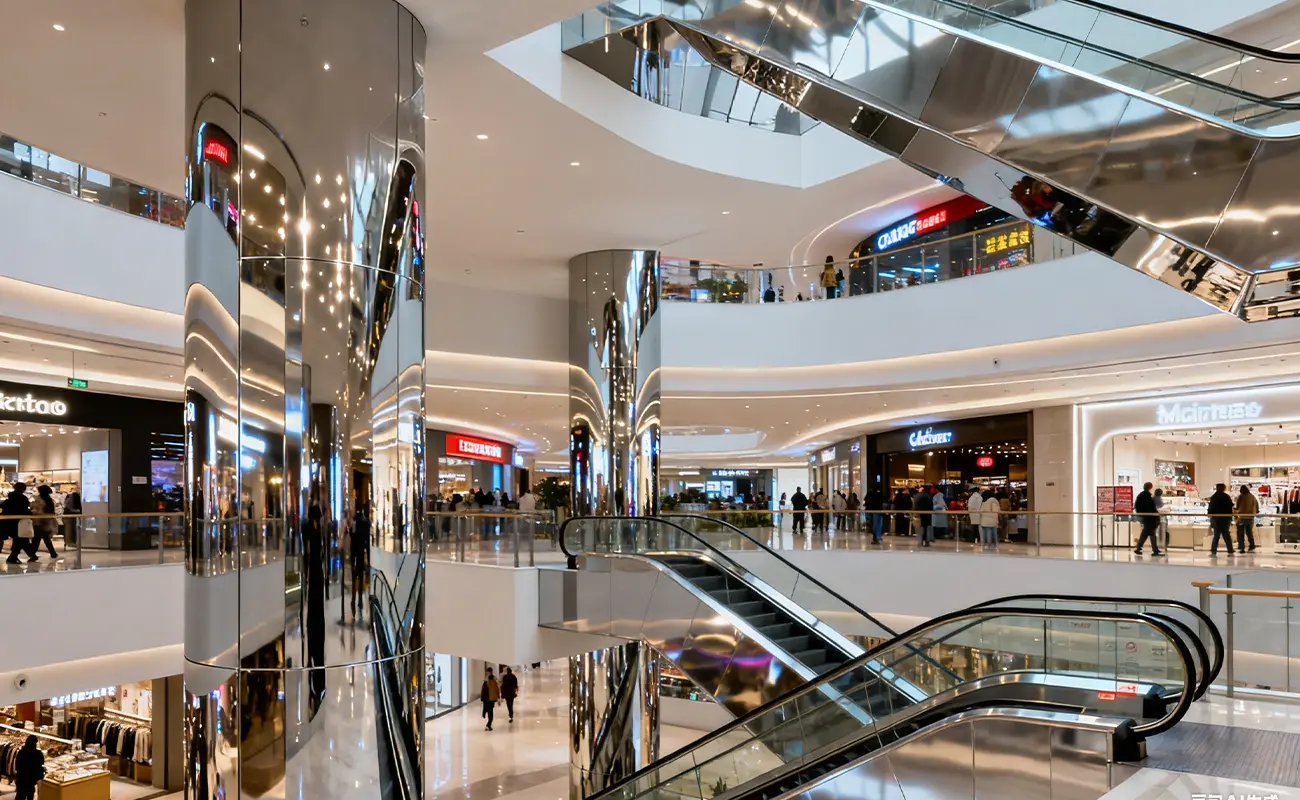
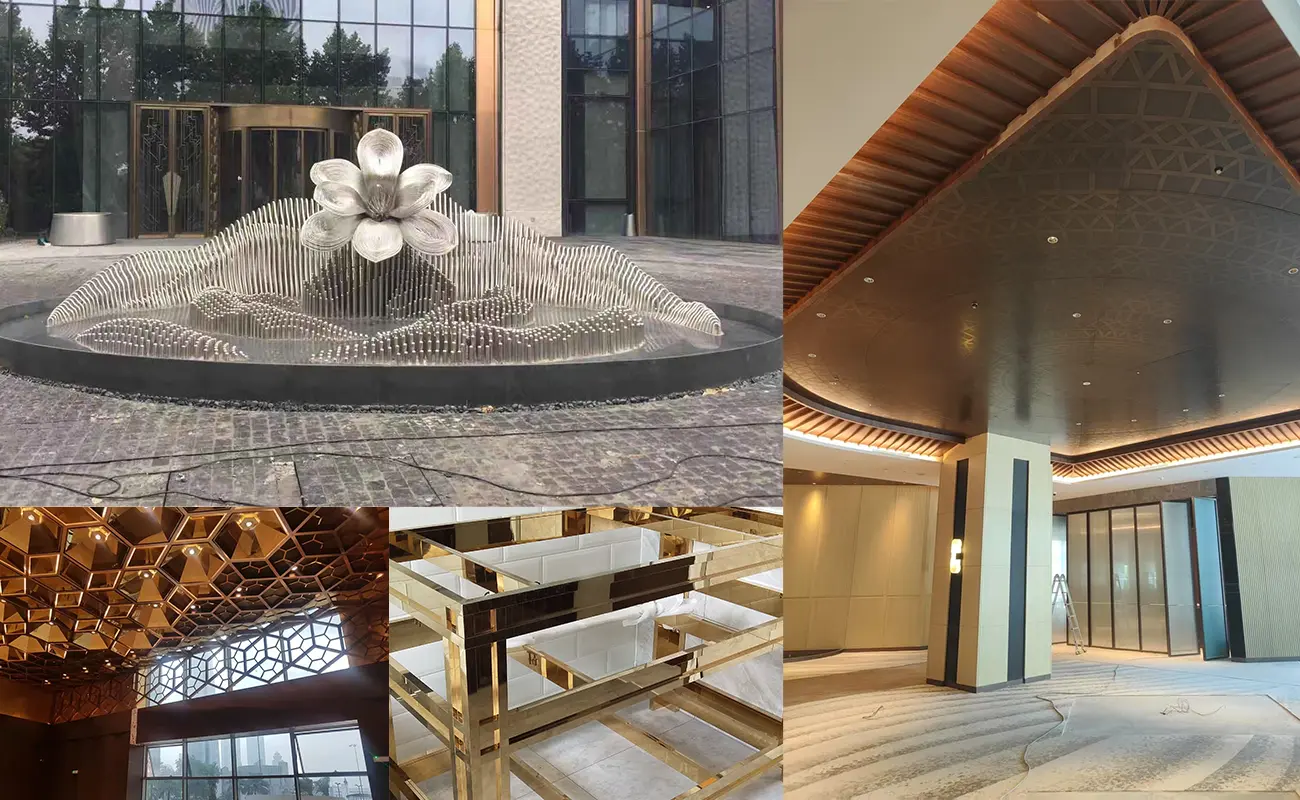
Super mirror stainless steel used in architectural and interior projects
Examples of mirror stainless steel used in architectural and decorative interior applications.
01

Elevator Interiors & Doors

Super mirror stainless steel is widely used for elevator cab walls, entrance surrounds, doors and decorative trim. The reflective surface can make compact elevator interiors feel brighter and visually larger, while stainless steel can be fabricated into panels and components according to project drawings.

02

Luxury Hotels & Hospitality Interiors

Hotels, restaurants and hospitality projects use mirror-polished stainless steel for reception backgrounds, lobby feature surfaces, columns, wall details and decorative metalwork. Gold, champagne gold, bronze and other PVD mirror finishes can also be used when a colored metallic appearance is required.

03

Retail Stores & Commercial Spaces

High-end retail stores, showrooms and commercial interiors often use super mirror stainless steel for display backgrounds, feature walls, trims and decorative surfaces. Its strong reflection can interact with lighting, glass and other materials to create a visually distinctive interior.

04

Wall Cladding & Decorative Columns

Mirror stainless steel can be fabricated into wall panels, column cladding and architectural feature surfaces. For larger installations, panel flatness, fixing methods, fabrication quality and alignment should be considered carefully because irregularities are easier to notice on highly reflective finishes.

05

Furniture & Custom Architectural Details

Super mirror stainless steel can also be used for reception desks, furniture accents, shelving, decorative trims and other custom architectural components. Cutting, bending and fabrication allow the reflective material to be integrated into designs where ordinary glass mirrors may be less practical.

Design consideration: Highly reflective surfaces make flatness, joints, fabrication marks and installation quality more visible. For large-format applications, we recommend confirming the required surface quality and approving a physical sample before production. For available specifications, visit our Mirror Stainless Steel Sheet product page.
Frequently Asked Questions

Super Mirror Stainless Steel FAQ

These are some of the most common questions buyers ask when specifying Super Mirror, No.8 or 8K stainless steel for architectural projects.

What is the difference between Super Mirror, No.8 and 8K stainless steel?

No.8 is a recognized mirror-polished stainless steel finish, while “8K” and “Super Mirror” are widely used commercial terms in the decorative stainless steel market.

The names alone do not guarantee identical reflection quality. Actual appearance can vary depending on base-sheet flatness, polishing quality, fabrication and the supplier's internal quality standard.

Does Super Mirror stainless steel show fingerprints?

Yes. Because the surface is smooth and highly reflective, fingerprints, dust and handling marks are generally more visible than on brushed, hairline or textured stainless steel.

This should be considered for high-touch applications. Regular cleaning and careful handling during installation are recommended.

How should Super Mirror stainless steel be cleaned?

Use a soft microfiber cloth with clean water or a mild neutral cleaner. Wipe gently and dry the surface with a clean soft cloth.

Avoid abrasive pads, steel wool and aggressive cleaners that may scratch or damage the polished mirror surface.

Which stainless steel grade should I choose for Super Mirror sheets?

Grade 304 is commonly used for indoor architectural and decorative applications. Grade 316 or 316L may be considered for coastal, humid or more corrosive environments.

Grade 201 and 430 may also be available for selected applications, depending on corrosion-resistance requirements, fabrication and project budget.

The grade should be selected according to the actual service environment rather than appearance alone.

Can Super Mirror stainless steel be used outdoors?

It can be used in some exterior applications, but suitability depends on the stainless steel grade, environment, exposure, fabrication and maintenance conditions.

For coastal or chloride-rich environments, 316 or 316L is commonly considered because it generally offers better corrosion resistance than 304. Exterior use should still be evaluated according to the specific project conditions.

Can Super Mirror stainless steel be PVD coated?

Yes. Mirror-polished stainless steel can be combined with PVD coating to create decorative colors such as gold, champagne gold, bronze, black and rose gold.

Because metallic colors can look different under different lighting conditions, approving a physical color sample before mass production is recommended for larger projects.

How can I evaluate Super Mirror quality before ordering?

Evaluate more than the finish name. Important factors include reflection clarity, sheet flatness, polishing marks, surface waviness, scratches, pits and consistency across the sheet.

For architectural projects, a physical sample is usually more useful than photographs alone because it allows the buyer or designer to inspect the surface under actual lighting conditions.

Can I request a physical Super Mirror stainless steel sample?

Yes. Physical sample approval is recommended when reflection quality, PVD color or surface consistency is important to the project.

For available grades, sizes and mirror finishes, see our Mirror Stainless Steel Sheet product page or contact us with your required specification.

Buyer Guide

How to Choose the Right Super Mirror Stainless Steel

Selecting Super Mirror stainless steel should be based on more than appearance alone. Grade, thickness, sheet size, required reflection quality, fabrication and project environment all affect the final result.

01

Choose the Stainless Steel Grade

Start with the service environment. Grade 304 is commonly selected for indoor architectural and decorative applications, while 316 or 316L may be considered for coastal, humid or more corrosive environments.

  • 304 — common interior architectural applications
  • 316 / 316L — more demanding moisture or chloride exposure
  • 201 / 430 — selected applications where project requirements allow
02

Select the Appropriate Sheet Thickness

Thickness should be selected according to panel size, fabrication, support system, fixing method and the final application. A thicker sheet is not automatically a structural or load-bearing panel.

For large mirror panels, thickness can also influence handling, flatness and resistance to visible deformation, so the specification should be confirmed together with the fabricator or project engineer.

03

Confirm Sheet Size and Panel Layout

Large mirror surfaces make panel joints and alignment more visible. Before ordering, confirm the required sheet size, cutting plan and finished panel dimensions.

  • Standard sheet dimensions
  • Custom cutting requirements
  • Panel segmentation
  • Joint position and alignment
  • Material utilization and cutting loss
04

Define the Required Mirror Quality

Do not specify the project only as “8K” or “Super Mirror.” Define what visual quality is actually required.

  • Reflection clarity
  • Acceptable surface waviness
  • Visible polishing marks
  • Surface flatness
  • Scratch and pit requirements
  • Consistency between sheets
05

Choose Silver Mirror or PVD Color

Standard Super Mirror stainless steel has a silver metallic appearance. PVD coating can be added when the project requires decorative colors such as gold, champagne gold, bronze, black or rose gold.

Because metallic PVD colors can change visually under different lighting conditions, physical color approval is recommended for larger projects.

06

Confirm Fabrication Before Production

Cutting, bending, welding, edge treatment and installation can influence the final appearance of a mirror-polished surface. Fabrication requirements should therefore be confirmed before material production or cutting begins.

  • Cutting and CNC requirements
  • Bending radius and direction
  • Edge treatment
  • Welding requirements
  • Protective film during fabrication
07

Approve a Physical Sample

For architectural projects where reflection quality or PVD color is important, physical sample approval is one of the safest ways to align expectations before mass production.

The approved sample can be used as a visual reference for mirror clarity, polishing quality, color and overall surface appearance.

Important: final material selection should consider the complete panel system, including substrate, support, fabrication, fixing method and installation. Sheet thickness alone should not be used to determine whether a panel is suitable for structural or load-bearing use.

Need Help Selecting a Super Mirror Specification?

Send us your required grade, thickness, sheet size, mirror quality, PVD color and fabrication requirements. We can help review the specification and prepare suitable samples for project approval.

View Mirror Stainless Steel Sheet

Inquiry Now

Share your idea, We’ll find solution for you within 12 hours.