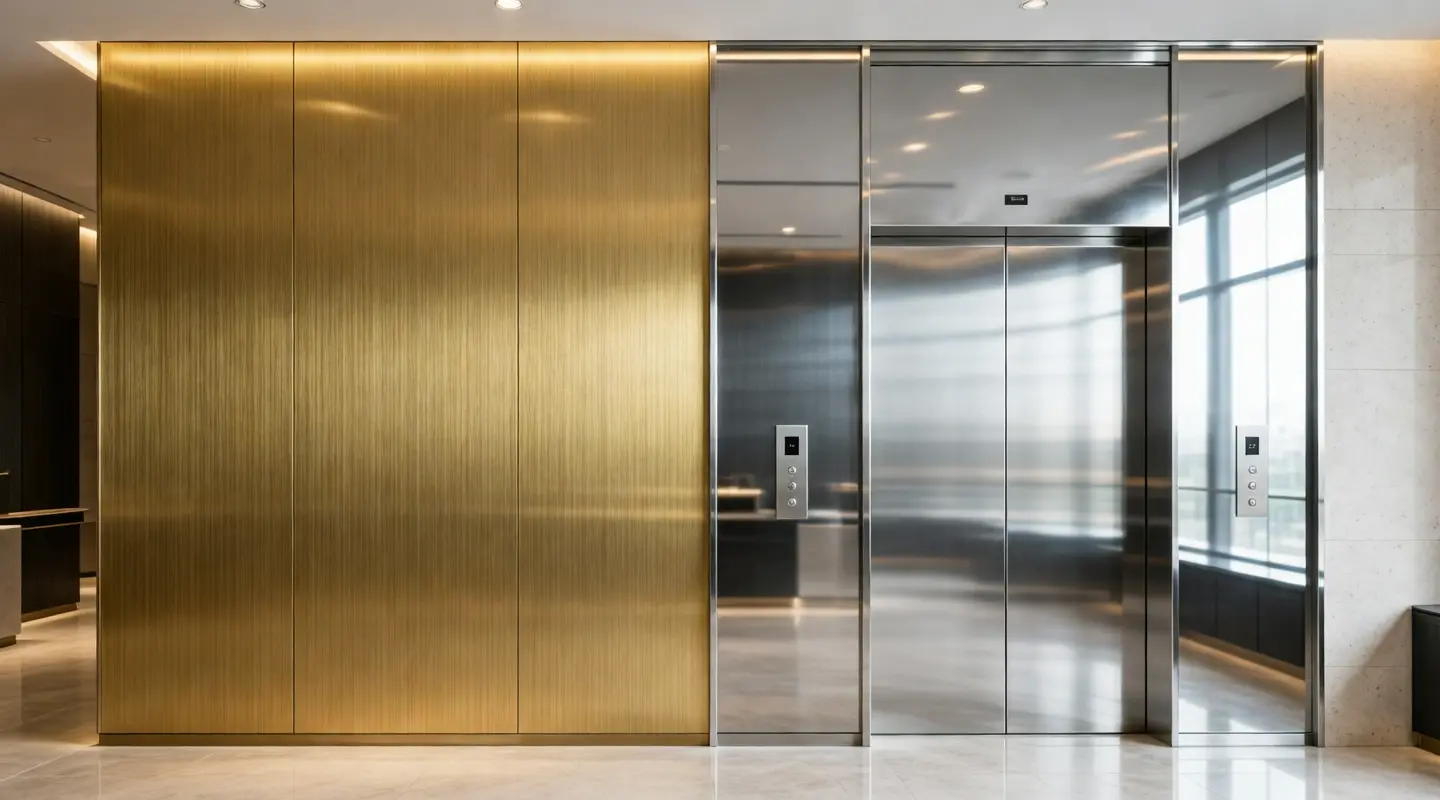
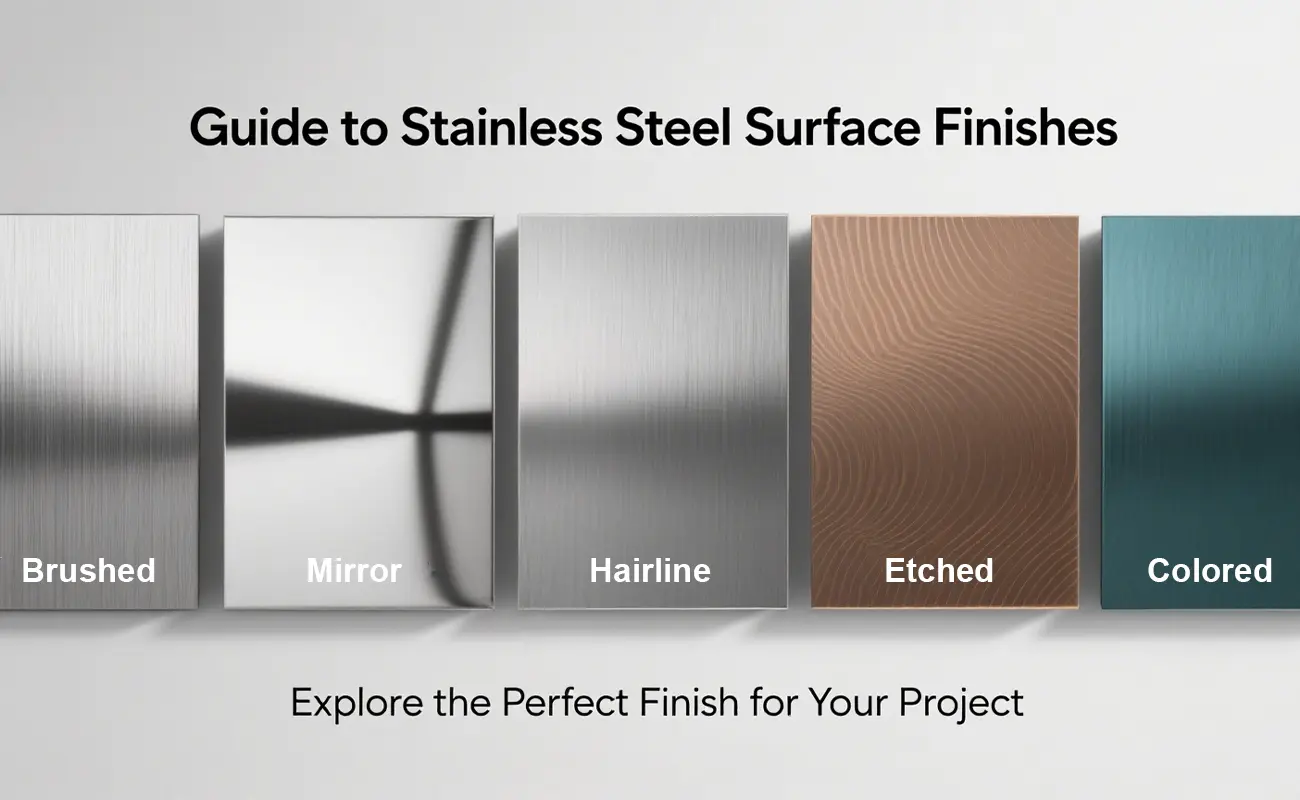
Stainless steel is one of the most widely used materials in industries such as construction, kitchenware, medical equipment, and architecture. Its popularity comes not only from its corrosion resistance and durability, but also from its surface finishes.
The surface finish of stainless steel plays a major role in its appearance, performance, and applications. A proper finish can make stainless steel more hygienic, easier to clean, more decorative, or more resistant to corrosion.
In this guide, we will introduce the most common stainless steel surface finishes, their features, and where they are used.
What Is a Stainless Steel Surface Finish?
A surface finish refers to the treatment applied to stainless steel to change its texture, gloss, reflectivity, and pattern. These finishes are achieved through different processes such as:
Mechanical finishing: Mirror, brushing, polishing, vibration
Surface texturing: embossing, bead blasting, water ripple, hammered patterns
Decorative surface treatments: etching, PVD coating, antique treatment, lamination
The result is a wide range of surface appearances, from rough industrial looks to highly reflective mirror-like finishes.
Types of Stainless Steel Surface Finishes
Stainless steel surface finishes can be grouped according to how the surface is produced and the appearance required. The table below provides a quick overview before looking at each finish in more detail.
| Finish Category | Common Examples | Main Characteristics |
|---|---|---|
| Mill Finishes | No.1, 2B, BA | Standard stainless steel surfaces formed during rolling, annealing and finishing operations. |
| Mechanical Finishes | No.4, Brushed, Hairline, Mirror, Vibration, Bead Blasted | Surface appearances created through grinding, brushing, polishing or abrasive treatment to control texture and reflectivity. |
| Textured / Patterned Finishes | Embossed, Hammered, Water Ripple | Three-dimensional or patterned surfaces formed through rolling, pressing or other mechanical shaping processes. |
| Decorative Surface Treatments | PVD, Etched, Antique, Laminated | Color, patterns and specialized decorative effects applied to the stainless steel surface for architectural and interior use. |
Finish terminology can vary between suppliers, especially for No.4, brushed and hairline surfaces. For decorative projects, the final surface appearance should be confirmed with a physical sample before production.
Common Stainless Steel Surface Finishes
1. No.1 Finish
Appearance: Rough, dull, non-reflective surface.
Advantages: Strong, durable, and cost-effective; excellent corrosion resistance.
Applications: Industrial equipment, chemical tanks, furnace parts.
2. 2B Finish
Appearance: Smooth, slightly reflective gray surface.
Advantages: Good corrosion resistance; easy to clean; economical.
Applications: Kitchen equipment, food processing, medical instruments.
3. BA (Bright Annealed) Finish
Appearance: Bright, highly reflective surface, smoother than 2B but not as perfect as mirror.
Advantages: Attractive look, excellent corrosion resistance, easy to clean.
Applications: Home appliances, decorative panels, architectural trim.
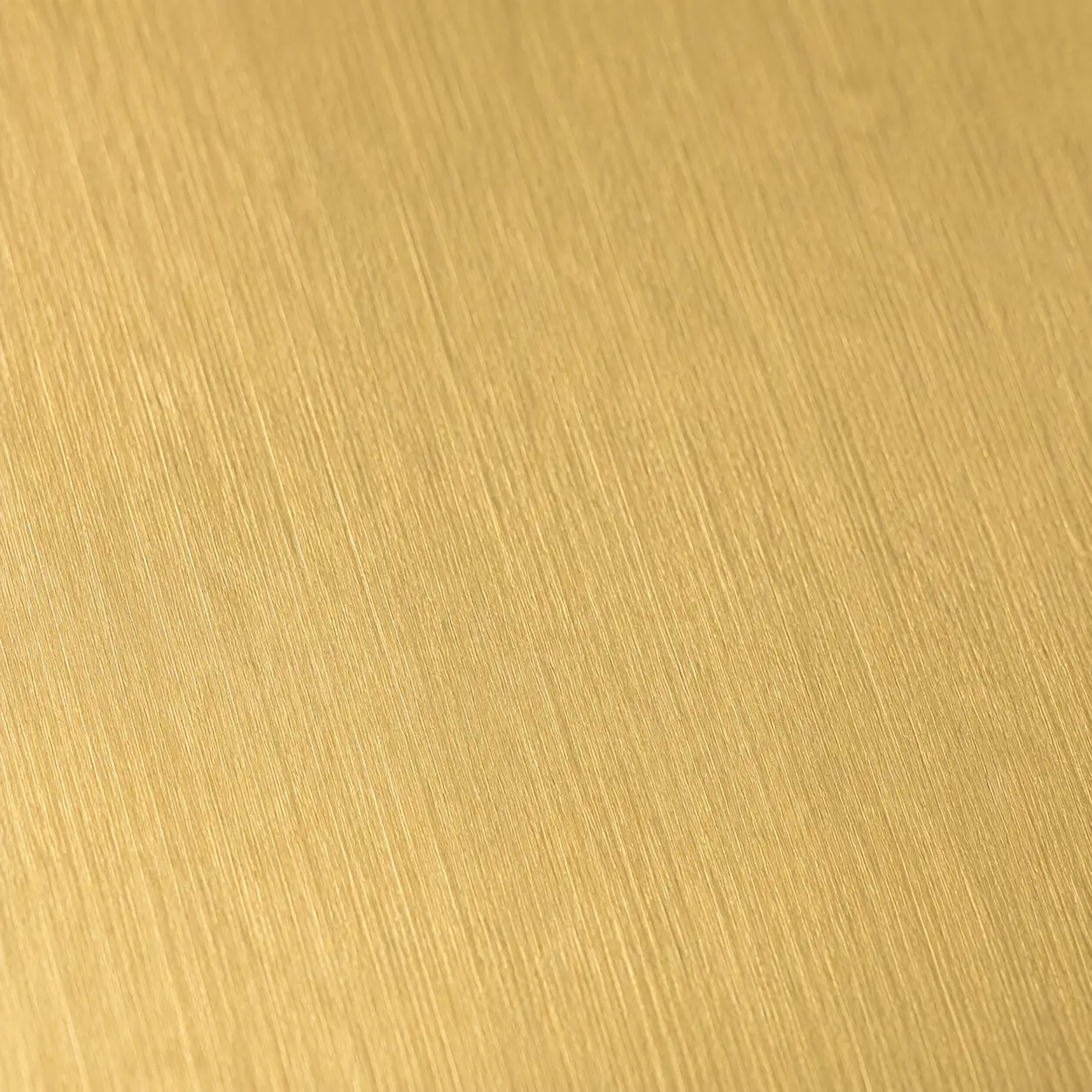
4. No.4 (Brushed Satin) Finish
Appearance: Fine, uniform, directional lines with satin effect.
Advantages: Professional look; hides fingerprints and minor scratches better than polished surfaces.
Applications: Elevators, wall panels, sinks, kitchen appliances.
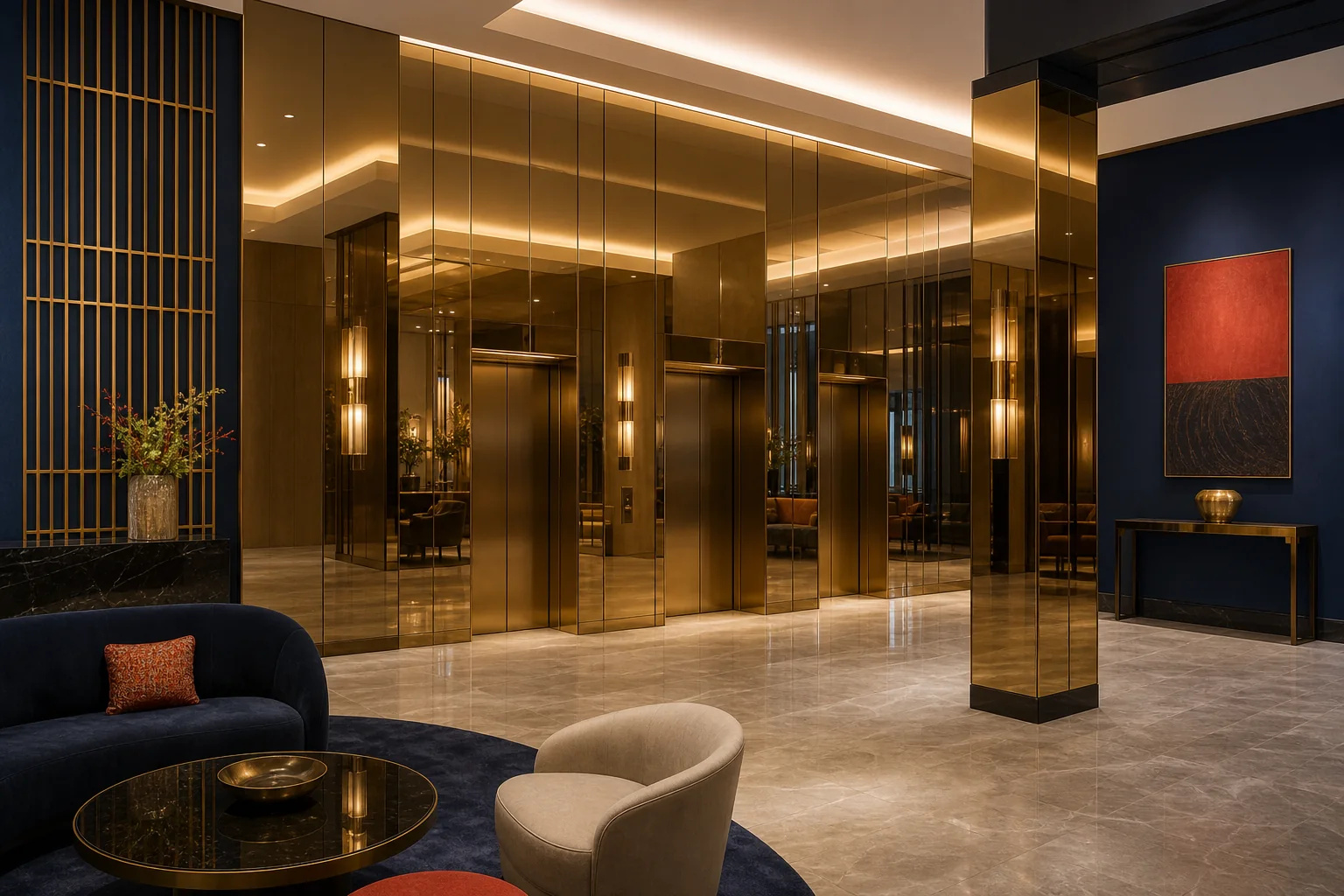
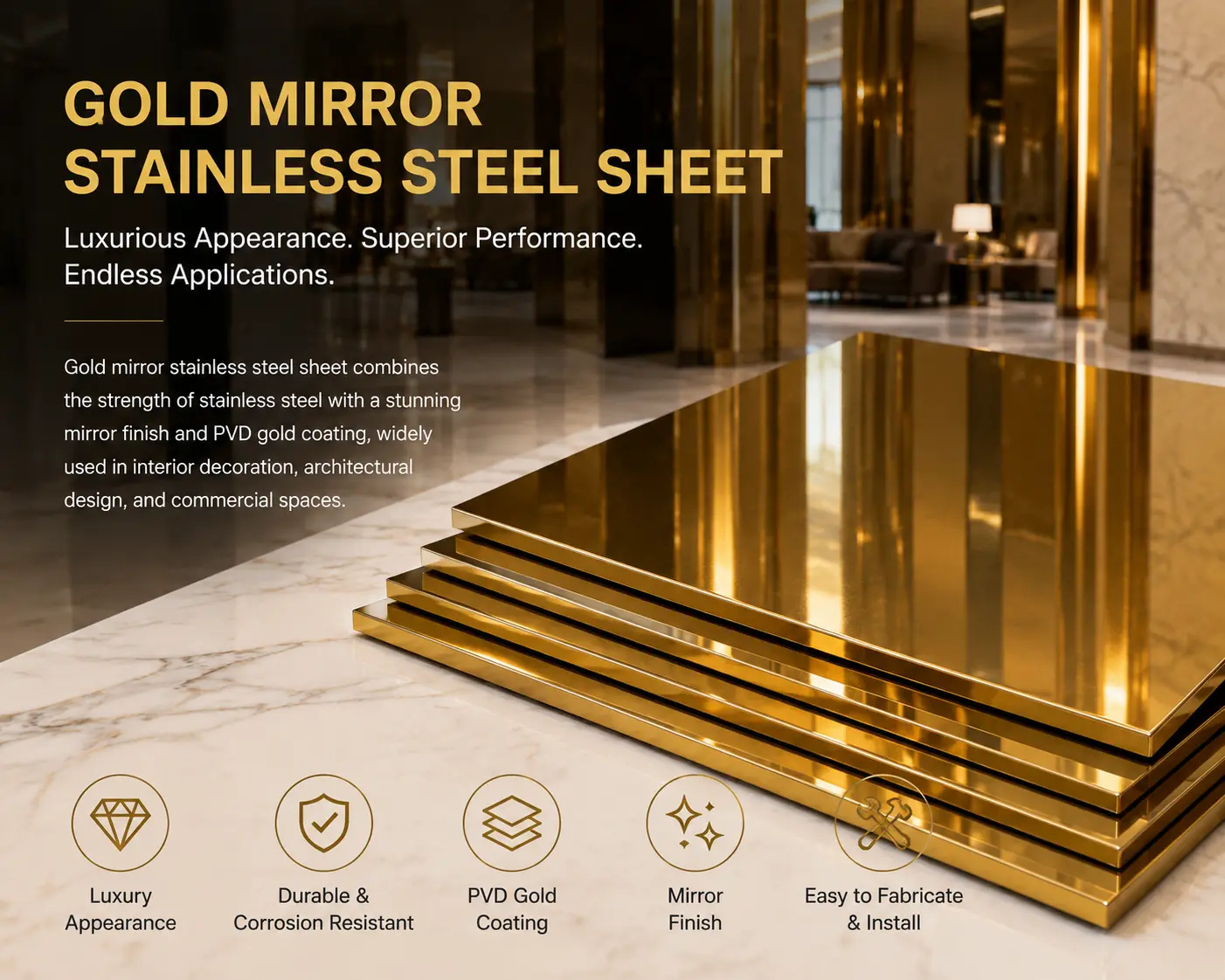
5. Mirror (No.8) Finish
Appearance: Highly reflective, flawless, mirror-like surface.
Advantages: Luxurious appearance; enhances brightness; smooth surface improves corrosion resistance.
Applications: Luxury decoration, signage, architectural features, furniture.
6. Hairline (HL) Finish
Appearance: Long, continuous, straight polishing lines, softer than No.4.
Advantages: Elegant and refined; hides scratches better than mirror.
Applications: Interior decoration, hotels, kitchen panels, appliances.
7. Brushed Finish
Appearance: Visible brush marks with an industrial, modern texture.
Advantages: Stylish matte appearance; reduces glare; resistant to fingerprints compared to mirror.
Applications: Commercial kitchens, wall cladding, decorative panels.
8. Vibration Finish
Appearance: Non-directional, multi-pattern surface with soft reflection.
Advantages: Excellent at hiding scratches and fingerprints; unique design effect.
Applications: Elevator interiors, decorative walls, high-traffic public areas.
9. Antique Finish
Appearance: Aged, vintage look with darker shades or patina.
Advantages: Distinctive style; creates classical or rustic effects.
Applications: Furniture, cultural buildings, hotels, artistic decoration.
10. Etched Finish
Appearance: Custom patterns or designs created through chemical etching.
Advantages: Highly decorative; customizable with logos or artistic patterns; durable.
Applications: Signage, architectural decoration, luxury interiors.
11. Embossed Finish
Appearance: Raised or recessed patterns pressed into stainless steel sheets.
Advantages: Adds depth and texture; improves strength; decorative.
Applications: Elevator cabins, wall panels, ceilings, facades.
12. Laminated Finish
Appearance: Stainless steel with decorative films or textures applied on the surface.
Advantages: Wide design options; scratch-resistant when protected by coating; stable color.
Applications: Interior decoration, signage, furniture, feature walls.
13. Sandblasted Finish
Appearance: Matte, uniform surface with fine grainy texture.
Advantages: Elegant and soft look; non-reflective; hides minor imperfections.
Applications: Architectural facades, furniture, art installations.
14. PVD Colored Stainless Steel
Appearance: Stainless steel treated with colors (gold, black, bronze, rainbow, etc.) using PVD or chemical methods.
Advantages: Luxurious decorative effect; scratch-resistant; durable color stability.
Applications: Hotels, shopping malls, architectural cladding, luxury design.
Performance Comparison
| Finish Type | Appearance | Advantages | Typical Applications |
| No.1 | Rough, dull | Durable, cost-effective | Industrial use |
| 2B | Smooth, gray | Hygienic, easy to clean | Kitchen, medical |
| BA | Bright, reflective | Attractive, corrosion resistant | Appliances, panels |
| No.4 | Satin, brushed | Professional, hides scratches | Elevators, kitchens |
| Mirror (No.8) | Mirror-like | Luxurious, smooth surface | Decoration, signage |
| HL | Long grain lines | Elegant, scratch-resistant | Architecture, interiors |
| Brushed | Coarse texture | Modern, reduces glare | Kitchens, cladding |
| Vibration | Non-directional | Hides fingerprints, unique | Public spaces |
| Antique | Aged look | Distinctive, rustic | Furniture, hotels |
| Etched | Patterned | Customizable, artistic | Decoration, signage |
| Embossed | Raised patterns | Strong, textured | Elevators, walls |
| Laminated | Film-coated | Colorful, durable | Interiors, signage |
| Sandblasted | Matte, grainy | Elegant, non-reflective | Facades, furniture |
| Colored | Gold, black, etc. | Luxury, durable color | Architecture, malls |
How to Choose the Right Finish
Industrial use → No.1, 2B
Hygienic environments (food, medical) → 2B, BA
Decorative purposes → No.4, HL, Mirror, Colored, Etched, Embossed
High-traffic areas → Vibration, HL, Brushed
Luxury design → Mirror, Colored, Etched, Antique
Quick Stainless Steel Finish Selection Guide
The right stainless steel finish depends on the required appearance, maintenance, fabrication and project environment. Use the table below as a quick reference before confirming the final surface sample.
| If Your Priority Is | Finishes to Consider | Confirm Before Ordering |
|---|---|---|
| Standard industrial use | 2B, No.1 | Grade, thickness and required base surface condition |
| Easy cleaning and a smooth surface | 2B, BA | Cleaning requirements and required reflectivity |
| Directional decorative grain | No.4, Brushed, Hairline | Grain direction, surface sample and finish consistency |
| High reflectivity | Mirror | Mirror level, flatness and final application environment |
| Non-directional decorative texture | Vibration, Bead Blasted | Texture sample, surface uniformity and cleaning requirements |
| Custom color | PVD | Base finish, approved color sample and project lighting |
| Custom patterns or 3D effects | Etched, Embossed, Hammered, Water Ripple | Pattern, depth, sheet thickness and fabrication requirements |
For decorative stainless steel projects, finish names alone are not always enough to define the final appearance. Confirm the physical sample, grain direction, color and surface texture before mass production.
Before Approving a Stainless Steel Finish
For decorative stainless steel projects, the finish name alone is often not enough to define the final appearance. Before mass production, confirm the key surface details with your supplier and approve a representative physical sample.
Confirm the Stainless Steel Grade
Confirm the required grade, such as 201, 304 or 316L, according to the application environment and project specification.
Approve the Physical Finish Sample
Finish names such as brushed, hairline or mirror can vary between suppliers. Use a physical sample to confirm the final surface appearance.
Check Grain Direction and Texture
For directional finishes, confirm the grain direction before cutting and fabrication. For textured surfaces, check the pattern scale and surface consistency.
Confirm Color Under Project Lighting
PVD and other decorative colors can appear different under warm, cool or natural lighting. Evaluate the approved sample in lighting similar to the final project environment.
Confirm Protective Film and Fabrication
Select the appropriate protective film and confirm whether the sheet will be cut, bent, welded or fabricated after finishing to reduce the risk of surface damage.
Conclusion
The surface finish of stainless steel determines not only how it looks, but also how it performs in different environments. From industrial finishes like No.1 and 2B to luxury options like Mirror, Etched, and Colored, there is a finish for every project.
By understanding the appearance, advantages, and applications of each finish, designers, engineers, and buyers can make informed choices that balance functionality, aesthetics, and cost.
✨ Whether you need brushed stainless steel for kitchens, mirror stainless steel for decoration, or etched stainless steel for custom design, our team can provide the right solution and professional guidance.
FAQ – Frequently Asked Questions
Q1: Which stainless steel finish is easiest to clean?
A: BA and Mirror (No.8) finishes are the easiest to clean due to their smooth, reflective surfaces. Brushed and etched finishes may require more attention because dirt can accumulate in grooves or patterns.
Q2: What is the difference between No.4 and Hairline (HL) finishes?
A: No.4 has shorter, more uniform brushed lines with a satin look, while Hairline (HL) has longer, continuous lines, giving a softer and more refined appearance. Both are good for decorative purposes, but No.4 hides minor scratches slightly better.
Q3: Can stainless steel be colored?
A: Yes, stainless steel can be colored using PVD (Physical Vapor Deposition) or chemical treatments to create gold, black, bronze, rainbow, and other finishes. Colored stainless steel is durable and widely used in architectural and luxury designs.
Q4: Which finish is best for high-traffic areas?
A: Vibration, HL, and Brushed finishes are ideal for high-traffic areas because they hide fingerprints, scratches, and wear better than mirror finishes.
Q5: Are etched or embossed stainless steel surfaces durable?
A: Yes. Both etched and embossed finishes are highly durable because the patterns are integrated into the metal surface rather than applied as a coating. They are suitable for decorative and functional applications.